Oil, varnish or polyurethane? Choosing the right finish for wood
Published by Chaingkiat & Furniture — Nearly 30 years of hands-on carpentry, with our own workshop and crew on Koh Samui. · · 6 min read
Two identical teak tables can age into different pieces of furniture, and the difference is usually the millimetre you cannot see: the finish. In a humid climate the finish is not cosmetic. It is the layer negotiating between the wood and air that stays wet for months, and each finish family negotiates differently.
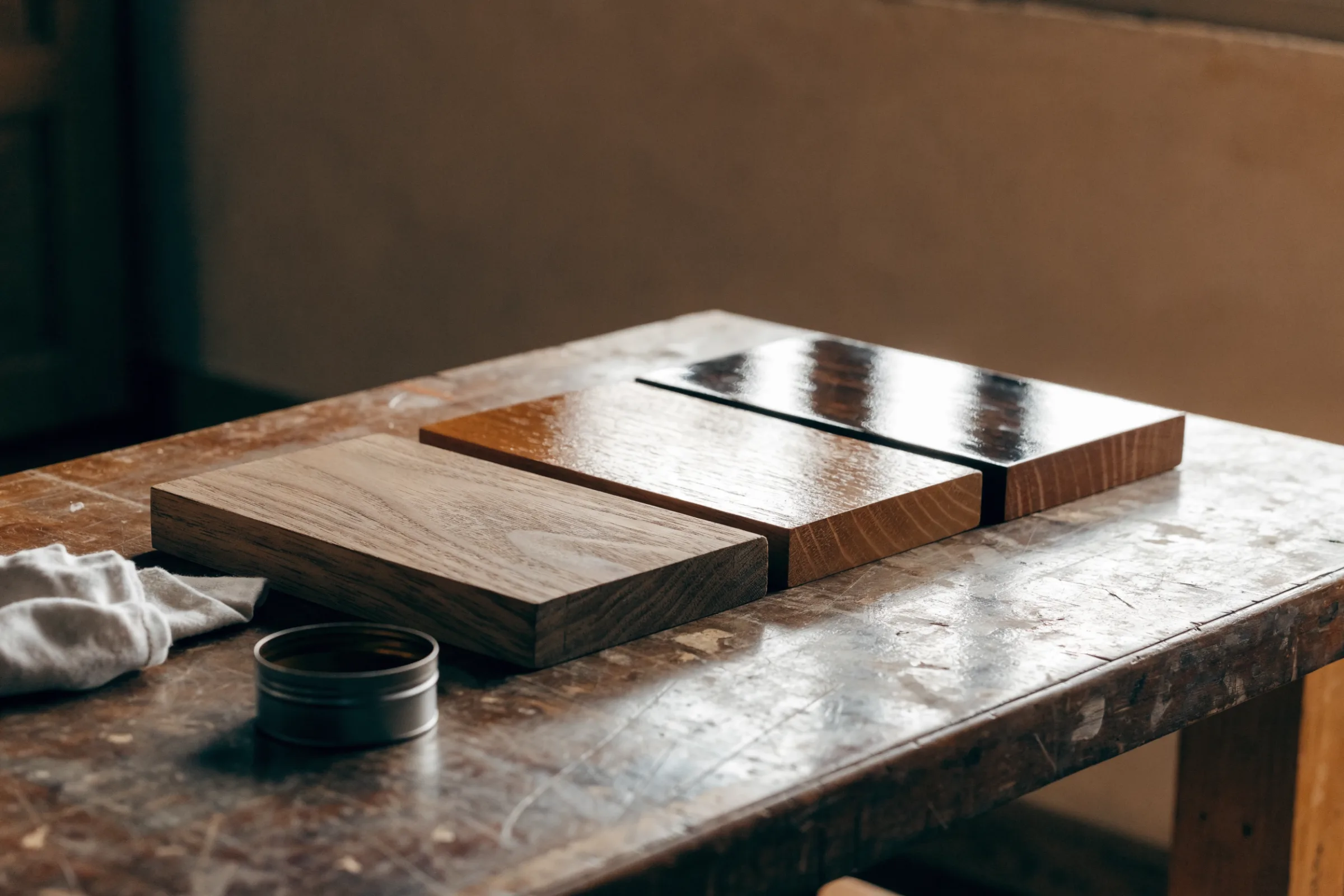
The oil vs varnish argument has run for as long as both have existed, and it stays unresolved for a good reason: they are not competing for the same job. This guide walks through the main families, what each one actually does on a piece of furniture, and how to match them to surfaces, without pretending there is one right answer.
What a finish is actually doing
Every finish belongs to one of two families. Penetrating finishes, the oils, soak into the surface fibres and harden there; the wood stays the outermost layer, and you touch timber when you touch the piece. Film finishes, varnish, polyurethane and lacquer, cure into a continuous skin on top; you touch the skin, and the skin takes the abuse.
In a wet climate that split translates directly into moisture behaviour. A film is a vapour barrier: it slows the wood's moisture exchange dramatically, which steadies the piece through the seasons, but only for as long as the film is intact. An oiled surface exchanges moisture more freely, so the wood moves a little more, and forgives a lot more when something goes wrong. Neither behaviour is a flaw. They are two strategies, and everything below is a variation on them.
The contenders, one by one
Rather than a table that flattens everything into ticks and crosses, here is each finish in turn, judged on the same five things: look, durability, moisture resistance, repairability, and the maintenance it asks of you.
Natural and drying oils
Teak oil, tung oil, the classic Danish blends. Look: the best in the business, low sheen, deep colour, real wood under your hand. Durability: modest; the surface scratches and marks, though marks tend to blend rather than shout. Moisture: the weakest of the families, fine against humid air, poor against standing water and sweating glasses. Repairability: unbeatable — clean the spot, wipe on more oil, and the repair is invisible, which no film finish can offer. Maintenance: the catch. Oil asks to be renewed, in this climate a few times a year on a working surface, and an oiled piece that stops being fed goes grey and thirsty; the re-oiling routine floors and decks live on is the same discipline writ large. Verdict: for people who enjoy caring for wood, on pieces that earn the ritual.
Hardwax oil
The modern middle path: oils blended with waxes that cure harder than oil alone. Look: nearly as natural as plain oil, usually matte or soft satin. Durability and moisture: a clear step up, enough for dining tables that see coasters and sense, still not a skin. Repairability: excellent, spot-repairable like oil. Maintenance: renewal, but far less often. Verdict: the strongest all-rounder for interior furniture when you want the oiled look without the oiled workload.
Varnish
The traditional film: alkyd and phenolic resins, and in its exterior form the spar varnish built for boats, flexible enough to move with the wood and loaded against UV. Look: classic, warm, amber, deepening with age. Durability: good; moisture: very good while intact, and the exterior versions are the reference standard outdoors. Repairability: middling — scratches can often be re-coated, but a finish that has broken down widely wants stripping. Maintenance: exterior varnish is not fit-and-forget; sun eats it from above, and it earns a refresh coat before it fails, not after. Verdict: the outdoor and doorway specialist, and the finish that keeps polyurethane honest indoors.
Polyurethane
The workhorse film, and the usual winner of the polyurethane vs varnish comparison on toughness alone. Look: honest but plasticky at high gloss; modern satin versions are far better behaved. Durability: the best here, shrugging off abrasion, alcohol and daily cleaning. Moisture: excellent while the film holds, which makes edge and underside coverage the whole game — water that finds a gap gets trapped under the film and shows as white clouding, then lifting. Repairability: the weak point; a damaged patch cannot be invisibly spot-fixed, and serious damage means sanding back to bare wood. Maintenance: nearly none, which is precisely its appeal. Verdict: hard-working horizontal surfaces, kitchens, and households that will never oil anything twice. And when a top does mark, what water rings and heat marks mean for each finish is worth reading before reaching for any remedy.
Lacquer, briefly
Sprayed nitrocellulose and modern catalysed lacquers are the factory and workshop finish: fast-curing, thin, even, and beautiful over large runs of doors and cabinetry. They reward controlled spraying conditions and punish site application, which is why lacquered work should arrive finished rather than be finished in your hallway. Wear and repair sit between varnish and polyurethane. Verdict: a workshop's finish more than a homeowner's — chosen for you more often than by you.
Water-based or solvent-based
Varnish and polyurethane both come in water- and solvent-borne versions, and the trade runs the same way in each. Water-based dries fast, smells little, and stays clear, keeping pale timbers pale. Solvent-based cures slower into a slightly tougher, warmer-toned film, and ambers with the years. On dark tropical hardwoods the warmth is usually welcome; on a pale ash or rubberwood piece it can be exactly what you did not want. Humidity complicates application for both — thick coats in saturated air dry badly — which is one more argument for finishing in a workshop rather than a living room.
Custom furniture & carpentry
Made-to-measure furniture and woodwork designed and built for your space, from single pieces to full fit-outs.
Explore serviceMatching the finish to the surface
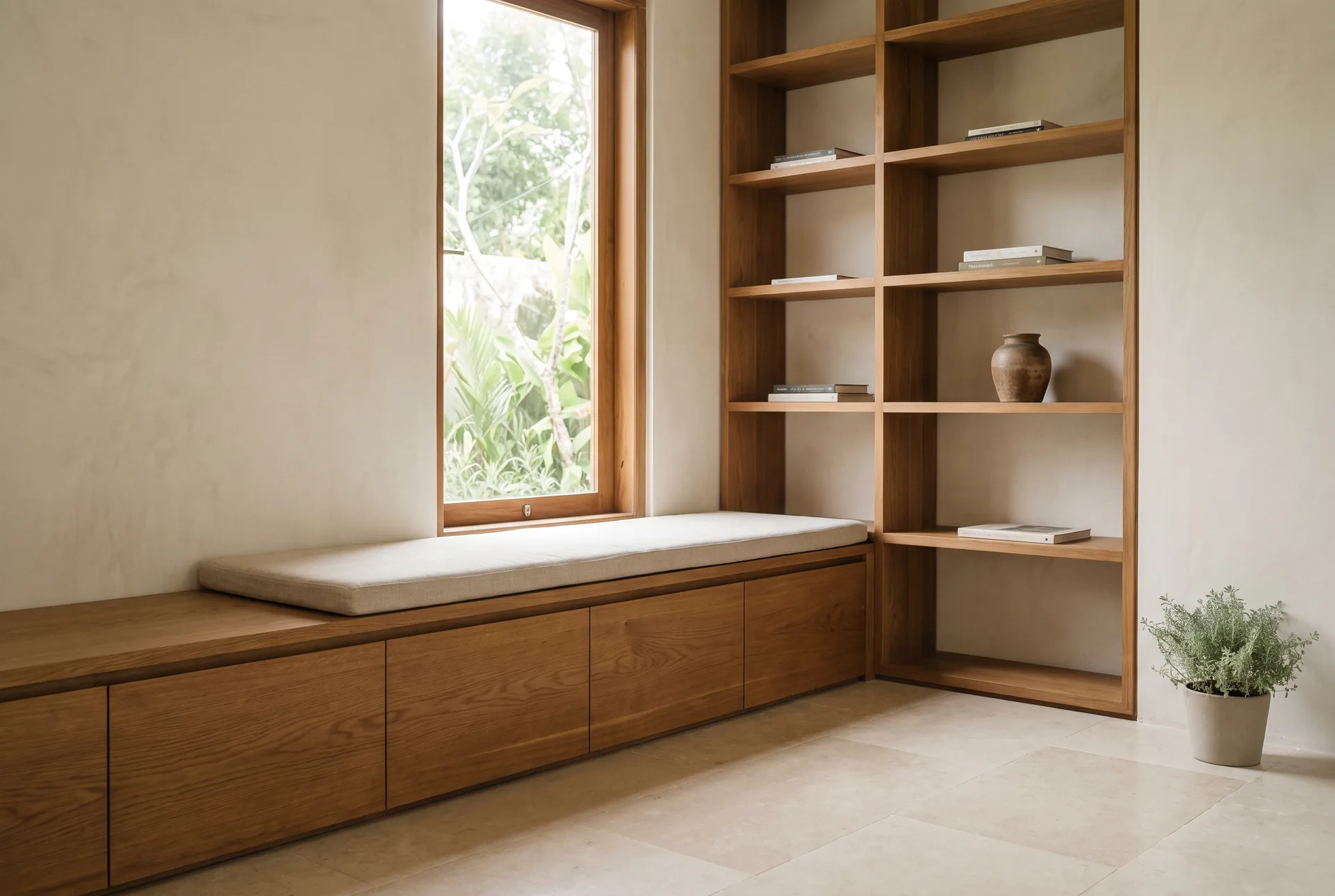
Real houses do not choose one finish; they choose several, by duty. Dining tops, desks and worktops live under glasses, keys and cleaning cloths, and favour a hard film or, for the committed, hardwax oil renewed on schedule. Chairs and touched edges wear at the contact points, where spot-repairable finishes age most gracefully. Overhead timber has the opposite life, no wear at all, so how ceiling and panelling timber gets finished is driven by sheen and colour, not armour: matte, so the light does not glare off the boards. A slatted or panelled wall runs on the same logic, and what a feature wall settles long before its finish is the planning half of that story. Kitchen tops sit outside this comparison altogether, because worktops are their own argument about surfaces.
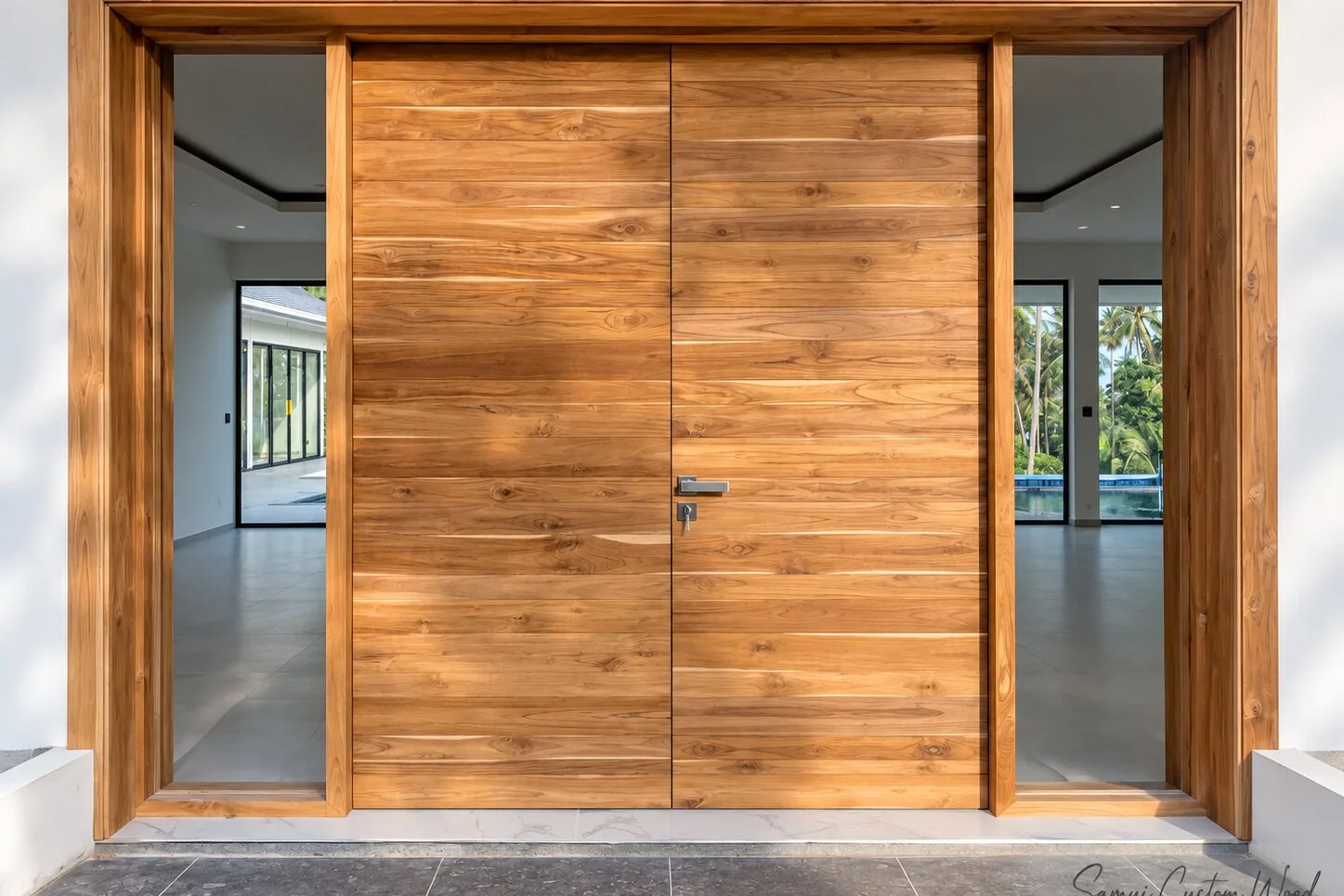
The hardest duty is the doorway. One face of an entrance door bakes outdoors, the other sits in conditioned air, and every edge meets the weather, which is why exterior doors and gates finished in our own paint shop get their coats sprayed and cured flat before installation, sealed on all six faces. The range that duty produces is visible in finished doors from matte black to oiled teak — same climate, different answers, each chosen for the door's exposure and the owner's appetite for upkeep. The movement side of that story, why exterior doors move more than anything else in the house, has a guide of its own.
How to actually decide
There is no best wood finish for a humid climate, and anyone selling you one is skipping the questions. There is only the best finish for this surface: where the piece lives, indoors, under a fan, or facing the sea; what lands on it daily; which timber is underneath and how much of its ageing you want on show; how much water it will realistically meet; matte honesty or gloss depth; and, most decisive of all, how much maintenance you will genuinely do, not how much you intend to.
Answer those honestly and the choice usually makes itself: films where the work is hard and the owner is busy, oils where hands touch wood and someone enjoys the ritual, exterior-grade systems wherever the sun can reach. And if the piece is being made rather than bought, decide the finish with the maker while it is still on the drawing, because the finish chosen at the end is the one chosen worst.
Related guides
- Custom furniture & carpentry
What wood survives a humid coastal climate?
How teak, other hardwoods and modern boards cope with humidity and salt air: what swells, what lasts, and how makers choose materials for coastal homes.Read the guide - Custom furniture & carpentry
How to protect wooden furniture in a tropical climate
How to protect wooden furniture from tropical humidity: placement, airflow, finishes that seal, aircon habits, and the fixes for swelling and sticking.Read the guide - Custom furniture & carpentry
What determines custom furniture cost on Koh Samui
What drives the cost of custom furniture on Koh Samui: materials, hardware, finish and size, island logistics, and how a per-project quote is put together.Read the guide
Related services
Tell us what you need built or installed.
Send a few photos and measurements — we'll get back to you with next steps.