
What determines custom furniture cost on Koh Samui
Published by Chaingkiat & Furniture — Nearly 30 years of hands-on carpentry, with our own workshop and crew on Koh Samui. · · 8 min read ·
Ask what custom furniture costs on Koh Samui and you get two kinds of answer. Bangkok factories publish ranges. Island workshops, ours included, say it depends. That sounds evasive until you see what a quote is actually assembled from, so this guide opens the arithmetic: which decisions move the number a lot, which barely touch it, and how to read the quotation when it lands.
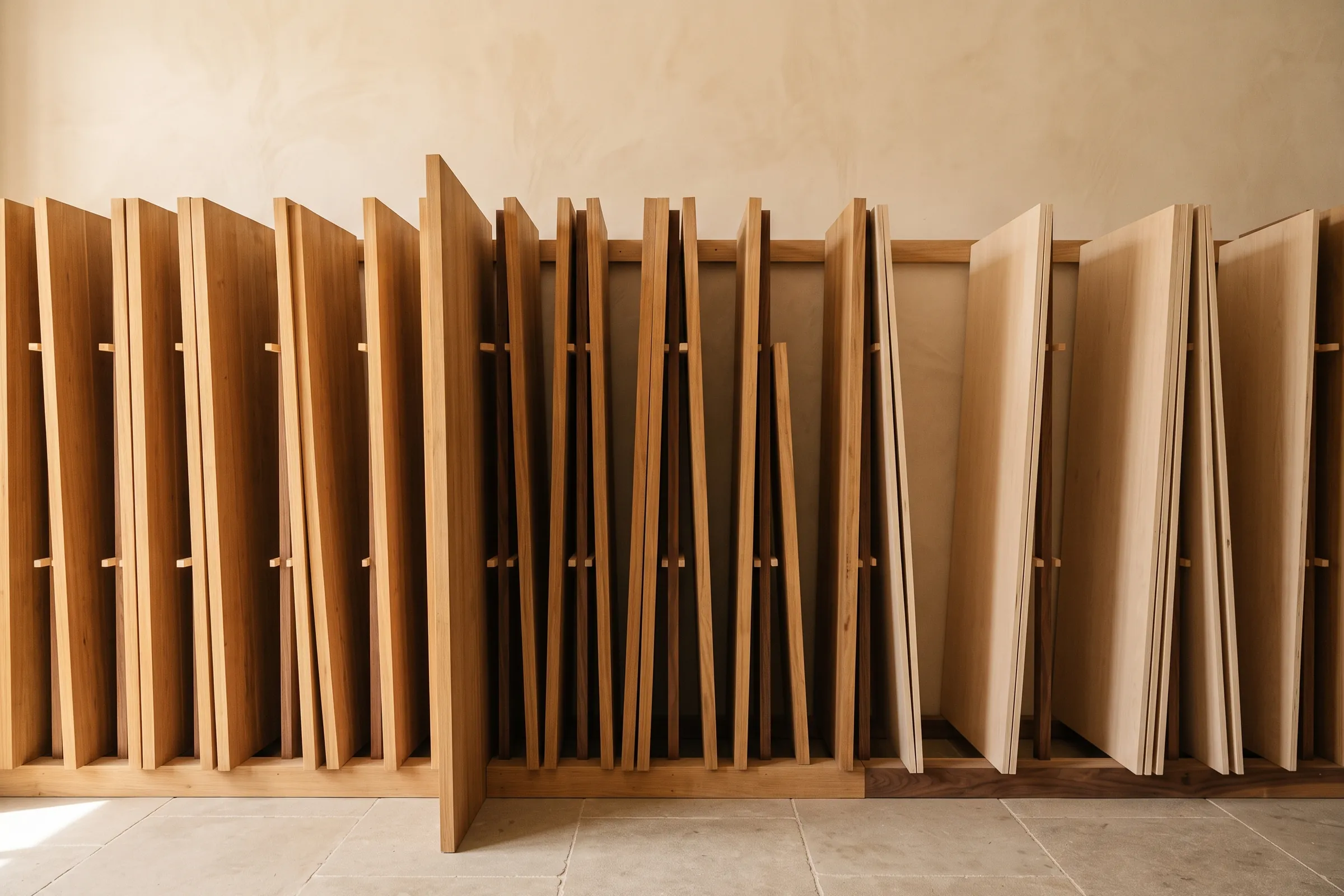
One thing you will not find here is our price list. There isn't one. Every piece we make is priced for the job it is, after the room has been measured, and a number printed on a page would be either meaningless or wrong. What we can show you is where the number comes from.
Why nobody serious quotes from a photo
A photo shows a shape. It does not show whether the carcass is solid timber or coated board, whether the drawers ride on the cheapest runners in the shop or on ones that cost ten times as much, or whether the wall it must fit against leans two centimetres off plumb. Two workshops can look at the same picture and honestly imagine two jobs that differ in cost by a factor of three.
That is why a piece designed and quoted for one room starts with questions rather than a figure. Before a real number exists, someone has to fix the dimensions, the timber or board, the hardware count, the finish system, and how the thing gets up your driveway. A price offered before those are known is not a price. It is bait, and the difference gets recovered from you later. The same rules hold for owners overseas; how the process runs when you can't be on site has its own guide.
The four levers that actually move the number
Strip any custom quote down and most of it sits on four decisions. They are worth understanding separately, because you control each one.
Timber and board
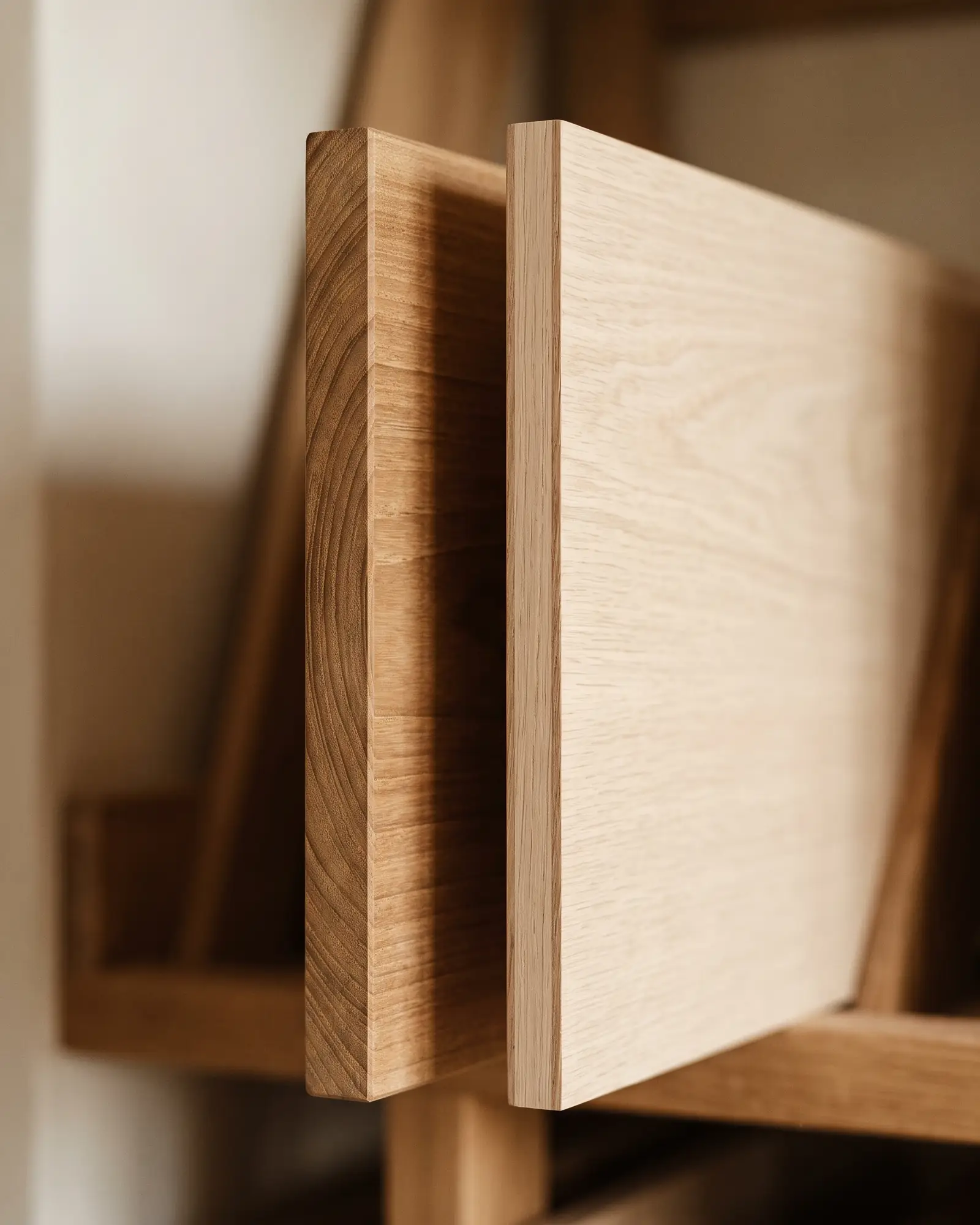
Solid hardwood costs more than veneered board, which costs more than coated particleboard, and the gap between grades of the same species can be as wide as the gap between species. The useful trick is knowing where solid wood earns its cost. A wardrobe is mostly carcass that nobody sees; sheet material there with solid or veneered fronts buys most of the look for much less than solid throughout. A dining table top takes a decade of hands, plates and sun, and there the timber is the whole point.
Hardware
Hinges, drawer runners, lift stays and locks are priced per piece, and the count climbs fast. A bank of six drawers is twelve runners; a full-height wardrobe can carry twenty hinges. Quality tiers are real here, not marketing: soft-close runners that still run straight after five humid years cost several times the bargain version, and this is the line where cheap quotes most often hide their savings.
The finish system
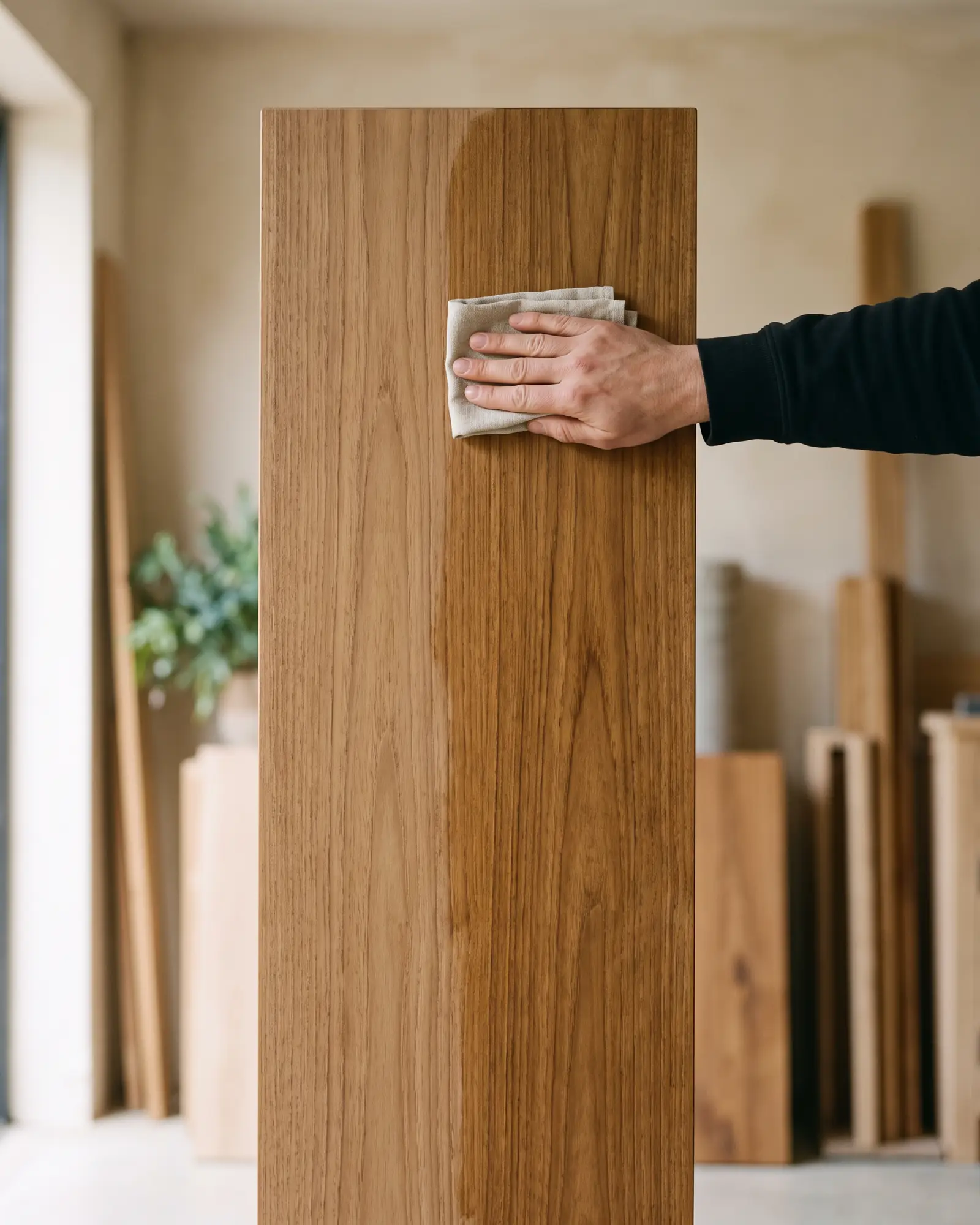
Finish is labour more than material. A sprayed lacquer finish means sealing, sanding, spraying and curing in more than one pass, and on this island every panel gets that treatment on both sides, because an unsealed back is where humidity walks in. You are paying to finish a piece you will only ever see one side of. Our paint shop keeps eight painters busy for a reason. Half the durability of a piece lives in this stage, and it is the least visible thing you pay for — and the choice carries forward, because what each finish type means for upkeep later is part of the same decision.
Size, complexity, and the room itself
Bigger costs more, but complexity costs faster than size. Curved fronts, internal lighting, grain-matched doors and drawers-inside-doors all add machine and bench time. So does the room: built-in work has to be cut and trimmed to whatever the walls actually do, and a piece made to non-standard dimensions cannot borrow any economies from standard parts. None of this argues against complexity. It argues for spending it where you will notice.
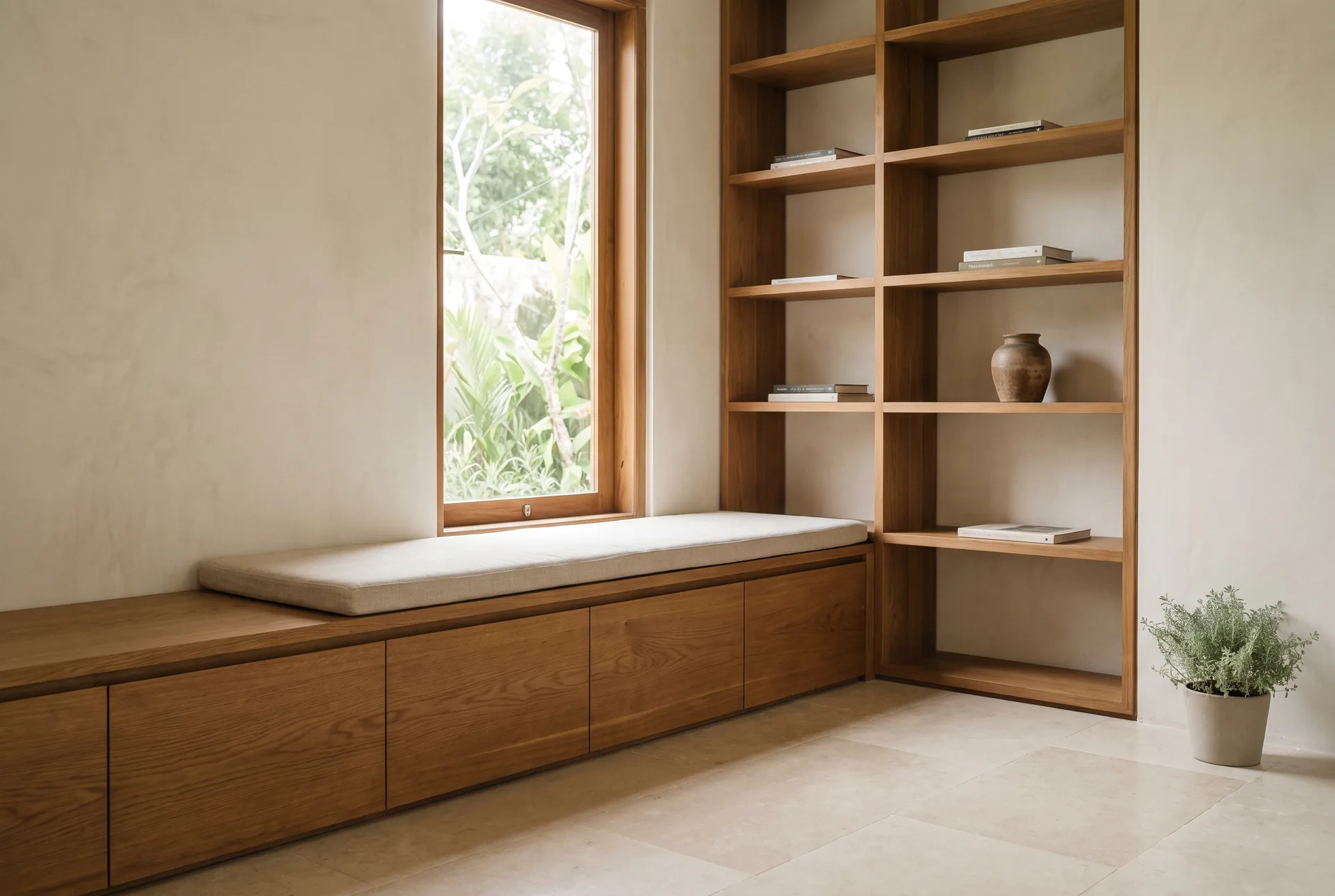
The piece where all four levers pull at once is the built-in wardrobe, which is why wardrobe quotes vary more than almost anything else a workshop prices. The carcass is sheet material bought by the square metre, the fronts carry the visible money, every drawer adds a pair of runners and every door its hinges, the finish has to reach faces nobody will see after installation day, and the whole assembly must be scribed to one specific wall. Two wardrobes of identical width can sit far apart in price purely on internals and fronts, so compare wardrobe quotes by the drawing, not the width — and it is why a wardrobe priced for the exact wall it must fit is quoted from a measured room, never from a size chart.
The island is a line item
Every board, hinge and litre of lacquer on Koh Samui crossed the sea to get here, and freight from the mainland is priced into everything a workshop buys. Then the finished piece has to reach your room. Island installation has its own economics: a hillside villa with forty steps and no truck access takes more crew hours than a ground-floor apartment in Chaweng, and a fitted piece needs those crew hours twice, once to measure and once to install.
This is not a complaint, and it is not a surcharge story. It is why a like-for-like piece can cost more here than a Bangkok showroom price suggests, and also why a mainland price that looks cheaper often stops being cheaper once it has been delivered, carried in and assembled. Wherever you buy, the sea is in the number somewhere.
Custom furniture & carpentry
Made-to-measure furniture and woodwork designed and built for your space, from single pieces to full fit-outs.
Explore serviceWhat the market publishes
For orientation, some makers across Thailand do publish figures, and they are worth reading as market observations rather than promises. Bangkok custom-furniture factories that post prices have advertised individual commissioned pieces from roughly ฿80,000, and whole-project ranges running from about ฿100,000 into seven figures for full villa fit-outs. On Samui, at least one design studio publishes per-linear-metre tiers for built-in work.
Treat all of these as what they are: other companies' published starting points, shaped by their materials, their overheads and their clientele. They tell you the order of magnitude serious custom work occupies. They cannot tell you what your piece costs, because nobody who publishes a range has seen your room.
Anatomy of an honest quotation
When quotes arrive, structure tells you more than the total. A quotation you can trust names each piece with its dimensions, states the material and the finish, and lists the hardware by type. It says plainly whether delivery and installation are included. It stages the payments against progress instead of asking for everything up front. And it writes down what it excludes, because unwritten exclusions are where surprise extras are manufactured.
Read that structure before you read the total. Two quotations for the same bedroom can sit a third apart simply because one of them has priced the installation and the other has left it to be discussed later, and the difference only surfaces on the day a crew turns up. Lay the documents side by side and go line for line. The cheaper one usually stops being cheaper somewhere around the hardware. A document can only be read as far as the workshop standing behind it, which is why how to vet the workshop behind the quote belongs beside this page rather than after it.
Where money is well spent, and where it quietly isn't
Spend on the parts you touch and the parts that fight the climate. Hardware repays its cost every single day for years. So does the finish system, invisibly. Solid timber earns its premium on worktops, table tops and anything that takes real wear. In a kitchen that premium has rivals, and where a kitchen budget quietly goes: the surface on top makes the comparison.
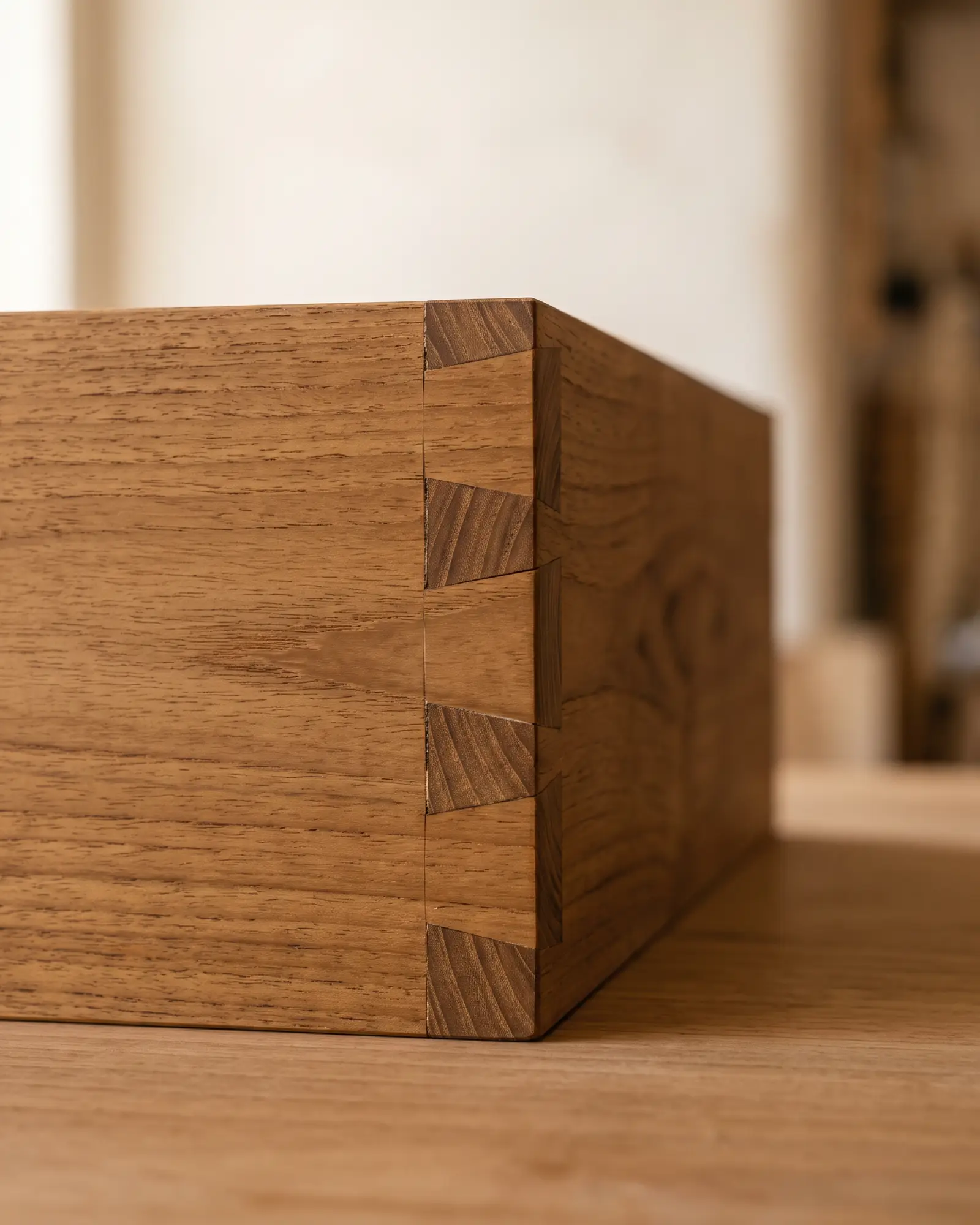
Be more sceptical about exotic veneer inside a cabinet, hand-shaped details above eye level, and solid hardwood in carcass panels that will never be seen again after installation day. A good workshop will tell you where a cheaper choice loses you nothing; how a maker answers that question is itself a useful test. You can see where we make these trade-offs in real commissioned pieces, photographed as delivered. The money sits in the surfaces and the movement, not hidden in the box — and how long a well-made piece lasts with basic care is the other half of the value question. So is what you lose when a built-in stays behind, on the day you eventually leave.
Quick answers to common cost questions
The same questions arrive with almost every enquiry, so here are the short versions, with the honest caveats left in.
How much does custom furniture cost in Thailand?
There is no single honest number, in Thailand or anywhere else, because the levers above — material, hardware, finish, size and complexity — move the total far more than geography does. The published figures earlier on this page show the order of magnitude serious commissioned work occupies, and the sea adds island logistics on top of any of them. A number offered before the room has been measured is a guess dressed as a price.
Can I set a budget before anything is measured?
Yes — and it is the most useful thing to bring to a first conversation. Name the figure you want to stay inside and the pieces that matter most, and a workshop can say early whether the brief and the budget live in the same world, and which material or hardware choice would bring them together. On our side that conversation costs nothing: consultation on interior work is free, and the measuring visit that follows is what turns budget talk into an itemized number.
How a quote comes together here
Our own process runs the way this guide would predict. It starts with a conversation about the room and what has to live in it; consultation on interior work is free. Then someone comes to measure, because we quote from a site inspection and our own tape, never from a client's sketch. From the measurements come drawings, and from the approved drawings comes an itemized quotation, priced per project: each piece, its materials, its finish, the installation. If you arrive with an architect's set already in hand, how a workshop prices and builds from supplied drawings walks that route.
That order matters. The measuring visit is what makes the number real, and it is also the point where a fitted piece's risk transfers to us: if we measured and it does not fit, the remake is our problem. If you are weighing up a piece and want to know what it would actually cost, that visit is the honest way to find out. Cost is one of two gates before a commission, and the other half of the quote: how long the work takes covers the other.
Related guides
- Custom furniture & carpentry
Custom vs ready-made furniture: which fits your villa?
Custom or ready-made furniture for a Samui home? How they compare on fit, durability in island humidity, and when a bought piece is the smarter choice.Read the guide - Custom furniture & carpentry
How to choose a carpenter on Koh Samui: what to check before hiring
What to check before hiring a carpenter on Koh Samui: workshop and crew, site measurement, drawings, finish quality, quotes, and the questions worth asking.Read the guide - Custom furniture & carpentry
Planning custom furniture for a Koh Samui villa
What to decide before commissioning custom furniture for a Koh Samui villa: materials for island humidity, measuring, and how the build and installation work.Read the guide
Tell us what you need built or installed.
Send a few photos and measurements — we'll get back to you with next steps.