
How long does custom furniture take on Koh Samui?
Published by Chaingkiat & Furniture — Nearly 30 years of hands-on carpentry, with our own workshop and crew on Koh Samui. · · 10 min read
Two people ask this question and they are not asking the same thing. One is comparing workshops and wants a single figure to rank them by. The other has a booking, a container or a family arriving, and needs a date they can plan around. The first question has no honest answer from anybody, including us. The second one does, but it arrives after someone has stood in your rooms with a tape measure, not before.
So this page does not hand you a number. It hands you what a number would hide: what each stage of a commissioned piece is actually waiting for, which stages run alongside one another and which ones stop everything until they clear, and the small set of variables that genuinely move a delivery date. Read it as the schedule half of a commissioning brief, because the price side of the same brief is written up on its own page. If you are past the research stage and want a date set against your own rooms, the route to one runs through a site visit and having the pieces made to your own rooms.
Why nobody can quote a duration from a web page
A published lead time is a figure for a workshop's most common job, and your job is probably not that one. A run of plain wall cabinets in a finished apartment and a villa's worth of fitted bedrooms, a kitchen and a set of doors are both described as custom furniture. They do not share a programme, and averaging them produces a figure that is wrong for both, in opposite directions.
There is a second reason and it matters more. A figure published on a web page gets quoted back at the workshop as a promise, and once it is a promise the pressure lands on the wrong thing: finishing fast rather than finishing properly, coats rushed, adjustments skipped, a piece delivered soft. We would rather be held to a date written down for your project with the scope attached than to an average written down for nobody.
What starts the clock
Any date is meaningless without a start point, and workshops do not use the same one. Some count from the day a deposit lands. Some count from the day you approve the drawings, which can sit a long way from the deposit if decisions are still open. Some quietly count from the day the last material arrives. When somebody hands you a timeline, the first question is not how long. It is: counting from which day, and what has to be true on that day?
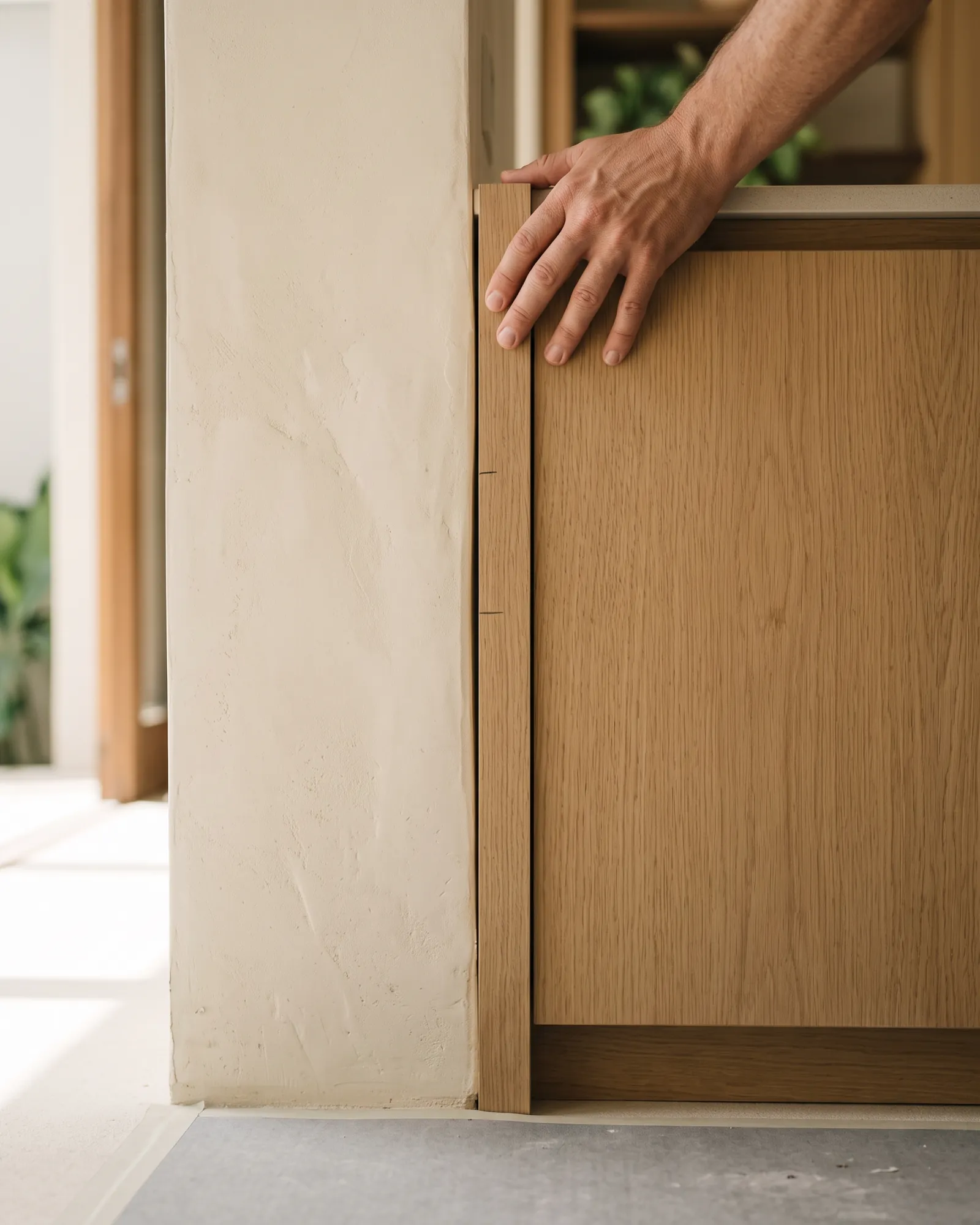
The second question is whether the clock can start at all. Fitted work is measured off finished surfaces, so a room still being rendered, or still waiting on its floor, cannot yet be surveyed to the tolerance a piece is cut to. The real gate is the site measure that has to happen before anything is scheduled, and a workshop that schedules production before that has happened is either guessing or planning to adjust on site, which is its own kind of delay. On Koh Samui the room is very often still being built when the question is first asked, which is exactly why the answer has to be conditional.

Read it as dependencies, not durations
The project journey, and what each step is waiting on
- Enquiry and free consultationWaits on your briefWhat each room is for, and what has to fit in it.
- Site visitWaits on accessSomebody has to be able to get into the rooms.
- MeasurementWaits on finished surfacesFitted work is measured off rendered walls and laid floors, never off a plan.
- Design and drawingsWaits on decisionsOne undecided appliance or handle leaves a drawing that cannot be closed out.
- Material and hardware selectionWaits on availabilityWhat is held locally moves sooner than what has to be ordered in.
- Your approvalWaits on youThe one step on this list whose pace is entirely the client's.
- ProductionWaits on the benchMachining, assembly and dry-fitting, in the order the workshop has committed to.
- FinishingWaits on the cureCoatings harden on their own schedule, and saturated air does not hurry them.
- Delivery to siteWaits on the routeGates, turns, stairs and lift doors decide what can arrive and when.
- InstallationWaits on the siteLevels, services and the trades ahead of us have to be finished, not nearly finished.
- Final adjustmentsWaits on settlingDoors and drawers are trued after the piece has stood and been loaded.
No step here carries a published duration, because none of them has one. Every step is quoted against your own project after the site measure.
What each stage is waiting for
The useful way to read a programme is not stage by stage in duration but stage by stage in dependency. Ask what each stage is waiting on, because the thing it waits on is the only thing anyone can change. The order itself is a separate subject: where the furniture slot sits in the whole-interior sequence covers it for a whole-interior programme. What follows is that same sequence read as a list of bottlenecks.
Before the workshop: waiting on information and on people
The opening stages wait on information, and most of that information is yours. Consultation waits on a brief, which means knowing what each room is for and what has to fit in it. The site visit waits on access. Measurement waits on finished surfaces. Drawings wait on decisions, and on all of them at once: one undecided appliance, basin or handle leaves a drawing that cannot be closed out, and an open drawing cannot be approved.
Approval waits on you, and it is the one stage whose pace is entirely the client's. Material and hardware selection waits on availability, which is a different question from price. A specification held locally can be slotted into work already on the bench. A specification that has to be ordered in carries somebody else's production run, freight and customs behind it before anyone here can touch it.
Inside the workshop: waiting on the bench and on the coating
Once drawings are approved the job becomes machining, assembly and dry-fitting, and the limiting factor is bench space and the order the workshop has already committed to. This is the part of a programme a client sees least and worries about most. If your drawing set already exists, what the production phase contains when drawings already exist walks through it from the inside.
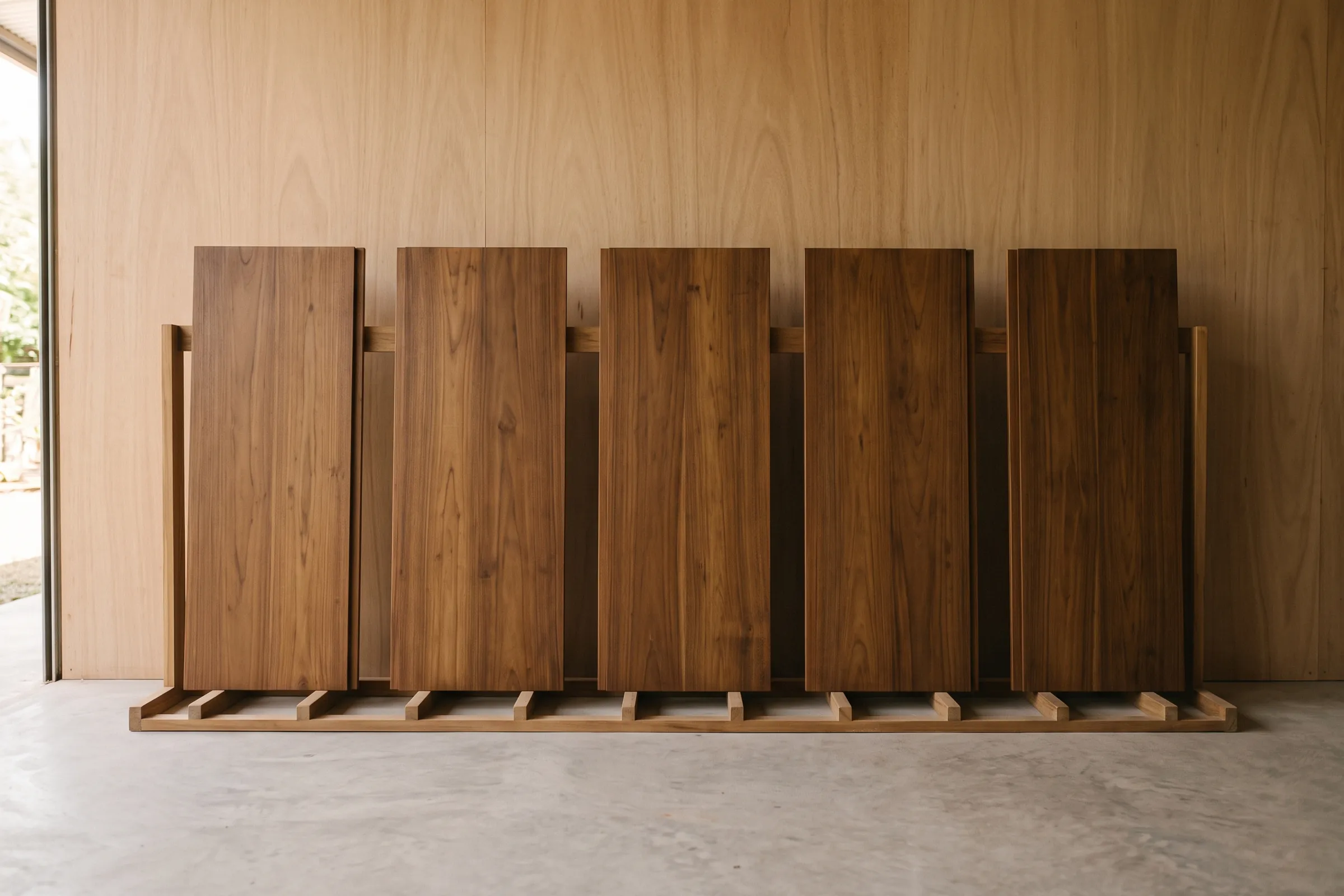
Finishing is the stage people underestimate. Coats go on in sequence and each one has to be hard before the next can follow, and a cure is chemistry rather than scheduling. Warm, saturated air slows it rather than speeding it up, which is a local fact with a schedule consequence. A piece pulled out of the finishing room early does not arrive sooner in any sense that matters, because it arrives soft and picks up marks in handling.
On site: waiting on the building and on the room
Delivery waits on the route. Gates, turns, stairs and lift doors decide what can be carried in, and whether a piece has to be assembled in the room rather than in the workshop, which is a different job. Installation waits on the site being genuinely ready: levels taken, services terminated where the drawings said they would be, and the trades ahead of us finished rather than nearly finished.
The last stage is the one most schedules leave off. A fitted piece is trued after it has stood in the room, because doors and drawers settle once they are fixed and loaded. Leaving a gap between installation and the day the room has to be in use is not slack in the programme. It is part of the programme.
What runs in parallel, and what stops everything
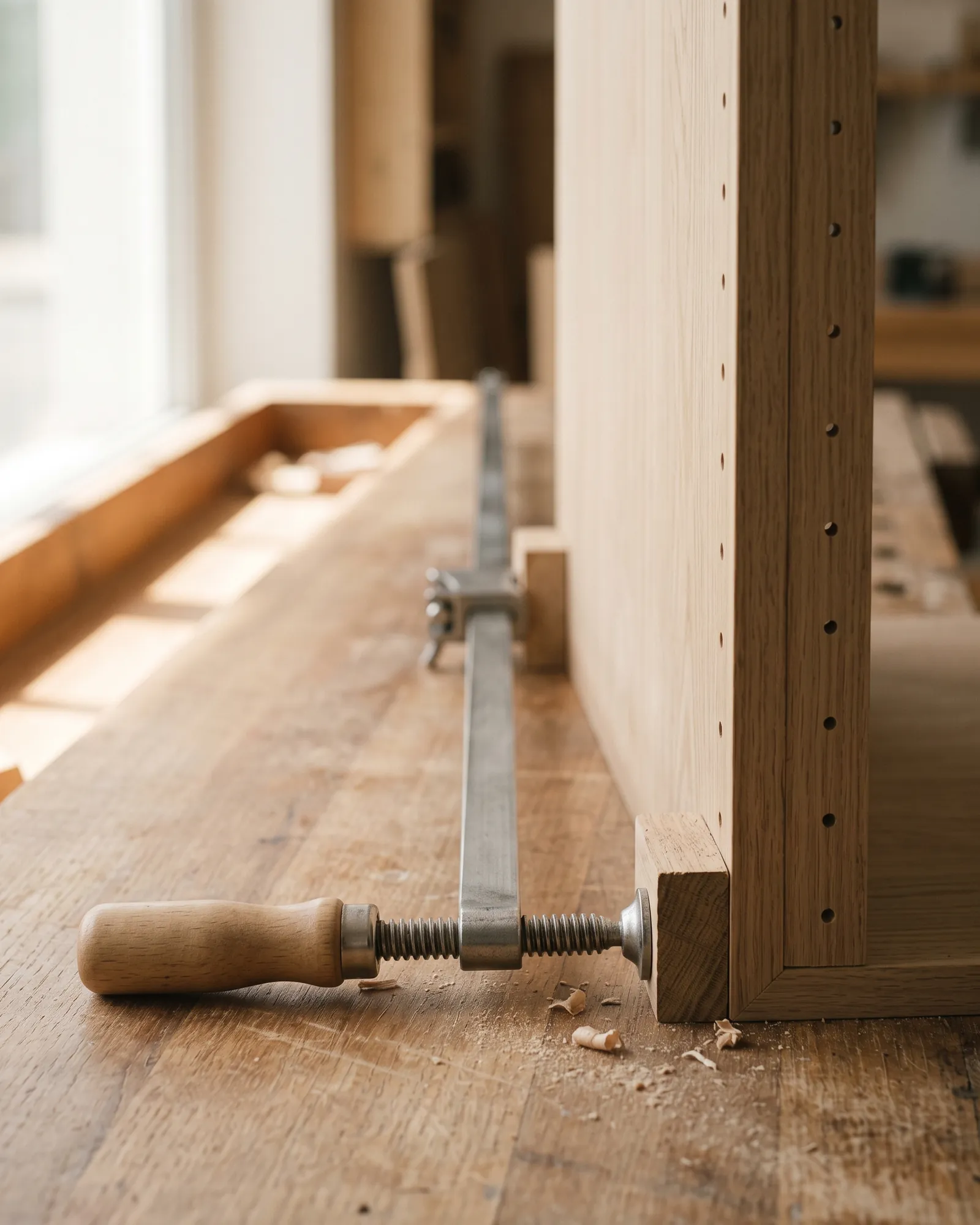
A bigger job is not proportionally longer, because a workshop runs streams alongside one another. Hardware is ordered while carcasses are machined. One batch cures in the finishing room while the next is assembled on the bench. Drawings for the second bedroom are drawn while the first bedroom is in production. Capacity is what makes that work: our own workshop in Chaweng runs twenty carpenters and eight painters, and the crew grows with the scope of a project instead of queueing behind it.
Blocking items behave in the opposite way. An unapproved drawing stops its own room. A single unchosen appliance stops the run it sits in. A wall that has moved since the survey stops the pieces that scribe to it. A material that has to come in stops whatever is made from it, and nothing else in that stream can advance past it.
Notice where those two lists sit. Parallel work is the workshop's problem to organise, and you should expect to see it organised. Blocking items sit mostly on the client's side of the table: decisions, approvals, the readiness of the room. That is better news than it sounds, because it means the largest single lever on your delivery date is how quickly you answer.
The variables that actually move a date
Each of these moves a date in both directions, which is why they belong in a conversation about your project rather than on a published figure.
Scope, quantity, and how custom the custom is
Repetition is quick. A run of similar cabinets shares a cutting list, a set-out and a finishing batch, so the second costs far less time than the first. One-offs are slow in a way that has little to do with size. Curved or carved work, a piece built around an existing object, mitred cladding that has to read as continuous grain, several finishes in one room: all of that adds set-up rather than material. Glass, stone inserts and specialist mechanisms add a third party's schedule to yours.
Hardware and materials that are not on the island
What is held locally can be slotted into work already on the bench. What has to be ordered in cannot, and that wait is not ours to compress: a supplier's production run, then freight, then customs, then the trip down to the island. Specifying a particular hinge, runner or mechanism is therefore a decision about the delivery date as much as about the cabinet. It is often worth it. It should simply be a decision taken knowingly rather than discovered later.
The site, and the trades ahead of you
Fitted work is the last trade in and the most exposed to everything upstream. A changed wall, a moved service point or a floor laid at a different height after the survey does not slow us down a little, it reopens the measurements. Kitchens have their own version of this, because a kitchen is two programmes stitched together rather than one: why a kitchen runs on two timelines, cabinets and worktop sets out the order of work, and the surface that sets its own schedule explains why the top cannot be made until the cabinets are standing and level. And when the whole upstream programme belongs to someone else, how we slot into a programme another contractor runs is set out on its own page.
The finish system you chose
A sprayed and fully cured finish, an oiled surface built up in coats, and a simple sealed board are three different durations and three different results. This is the one variable where paying for speed is usually paying for a worse piece, so it is worth knowing which of the three a quoted date assumes.
Two quoted timelines are rarely comparable
Put two timelines side by side and check four things before believing either. Which day each counts from. What sits inside the date and what sits outside it: does it end at delivery, at installation, or after the adjustment visit. Whether the same list of pieces is in both. And what each workshop assumes about your site, because the assumption is where a slip hides.
A longer stated timeline is sometimes the more honest one. A workshop that has told you it counts from approved drawings, includes installation and the snagging visit, and has allowed for a finish that cures properly will read as slower than one quoting deposit-to-delivery on a thin finish. Compare the documents rather than the figures.
Custom furniture & carpentry
Made-to-measure furniture and woodwork designed and built for your space, from single pieces to full fit-outs.
Explore serviceHow to get a date you can hold someone to
A date you can plan around has four features. It lives in the quotation rather than in a message. It is broken into milestones that mean something observable: drawings approved, production complete, delivered to site, installed, adjusted. Each milestone has evidence attached, which for an owner who is not on the island means photographs at the stages that matter. And it says what happens when something slips, including who tells whom and how quickly.
Then ask the question the other way round. Ask what the workshop needs from you, and by when, for that date to hold. A maker who cannot answer that has estimated your job rather than planned it, and the difference shows up later as a conversation about whose fault the date was.
Where we stand on this
We do not publish a standard lead time, and the reason is the whole of this page: no single figure would be true of the next job we are asked to quote. Consultation on interior work is free. Someone comes to the rooms and measures. What follows is an itemized quotation priced per project, piece by piece with its materials, finish, hardware and installation set out, and a realistic timeline arrives with it rather than ahead of it.
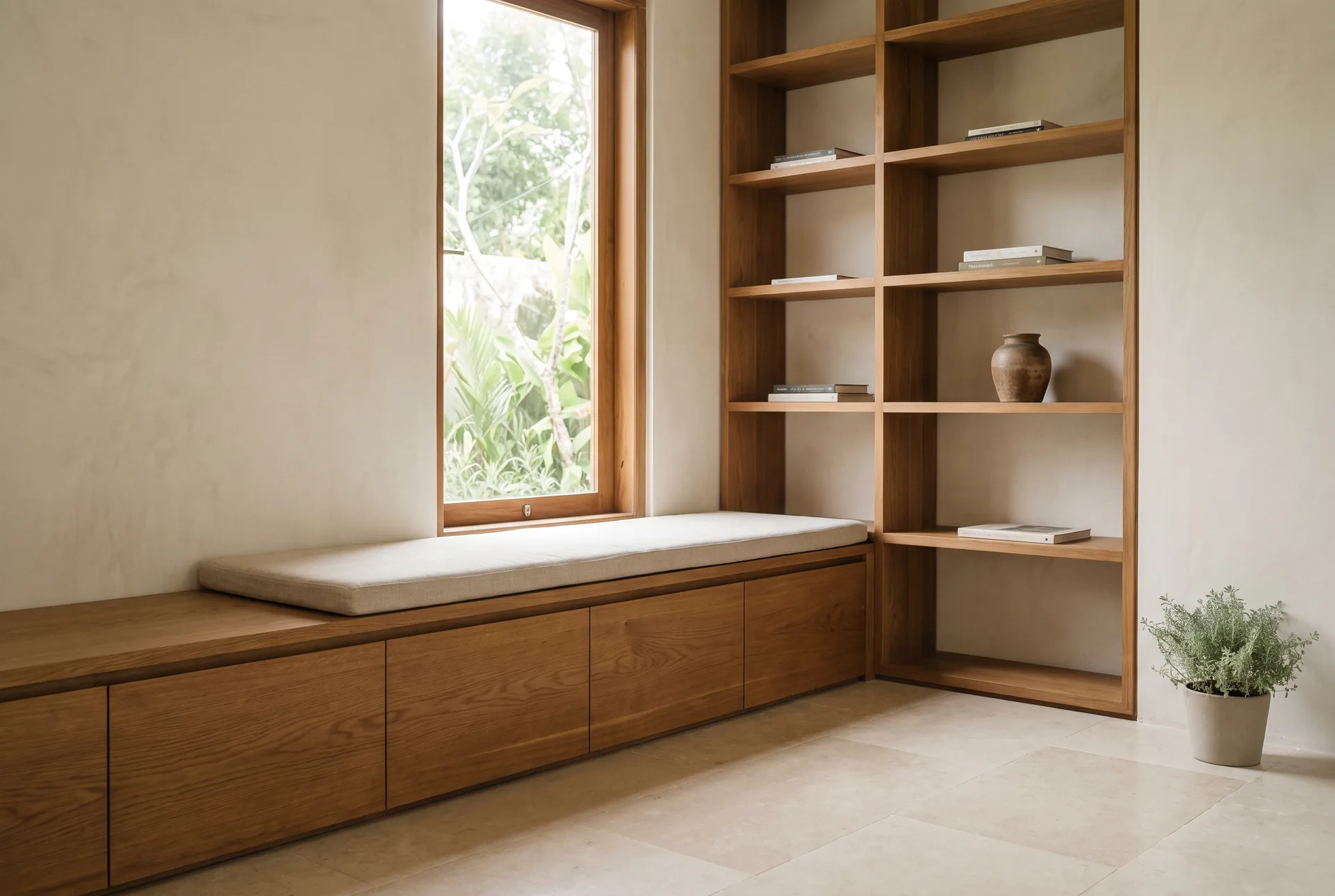
Nearly thirty years of this has made us careful about dates rather than confident about them. The workshop is ours, in Chaweng, and the crew scales with a project instead of parking it in a queue, which is what makes a committed date possible at all. And what the end of this process looks like on site is the thing a timeline exists to protect.
Related guides
- Custom furniture & carpentry
What determines custom furniture cost on Koh Samui
What drives the cost of custom furniture on Koh Samui: materials, hardware, finish and size, island logistics, and how a per-project quote is put together.Read the guide - Custom furniture & carpentry
How to measure a room for built-in furniture
Measure a room the way a workshop expects: the three-point rule, leaning walls and falling floors, services to note, and the brief a built-in needs.Read the guide - Wooden ceilings & architectural woodwork
Planning interior woodwork: from measurements to installation
The sequence behind villa interior woodwork: survey and measurements, deciding the built-in elements, lighting, trade coordination, production, installation.Read the guide
Related services
Custom furniture & carpentry
Made-to-measure furniture and woodwork designed and built for your space, from single pieces to full fit-outs.
Explore service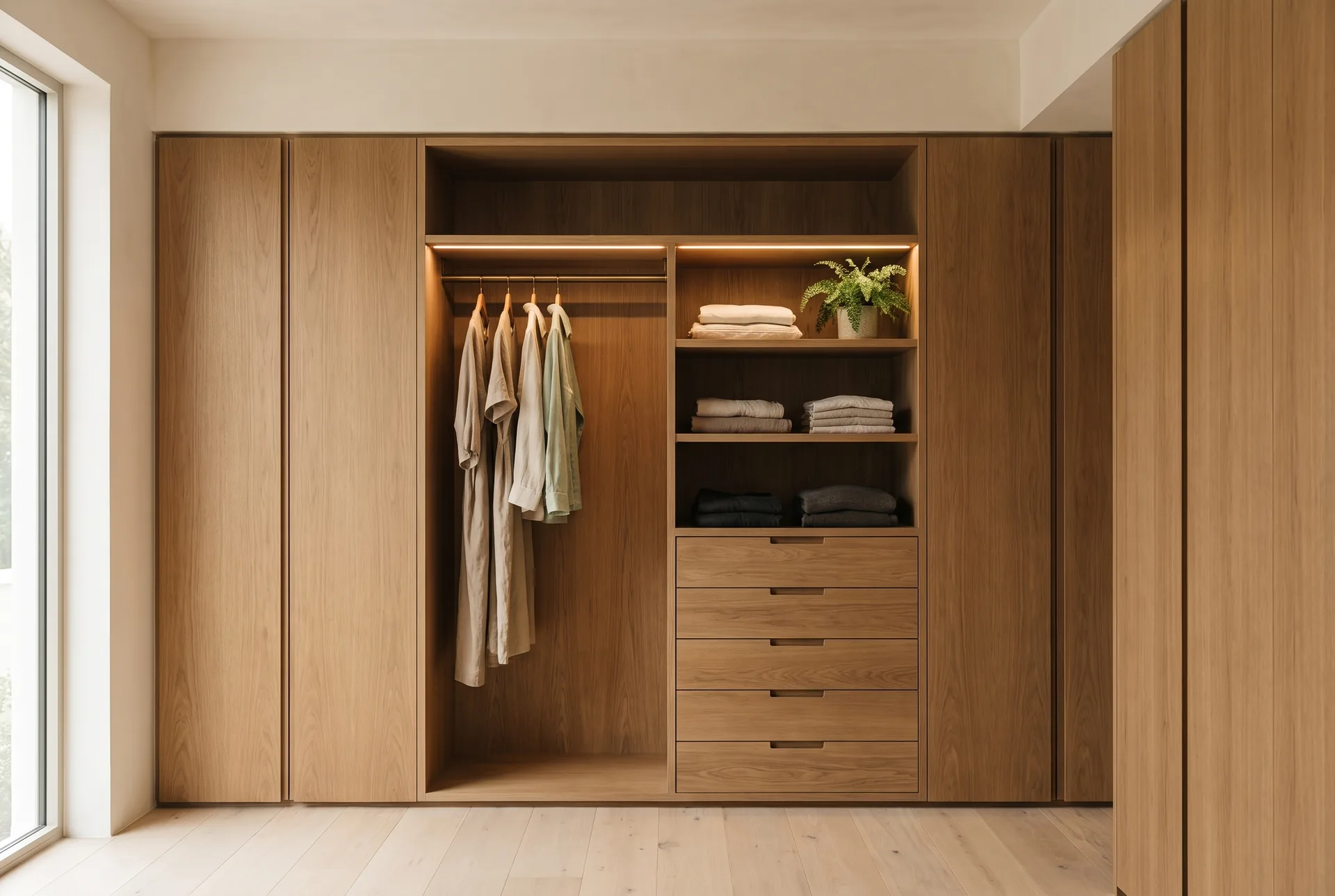
Built-in wardrobes & cabinets
Built-in wardrobes, closets and storage cabinets that use every centimetre. Measured, built, and installed.
Explore service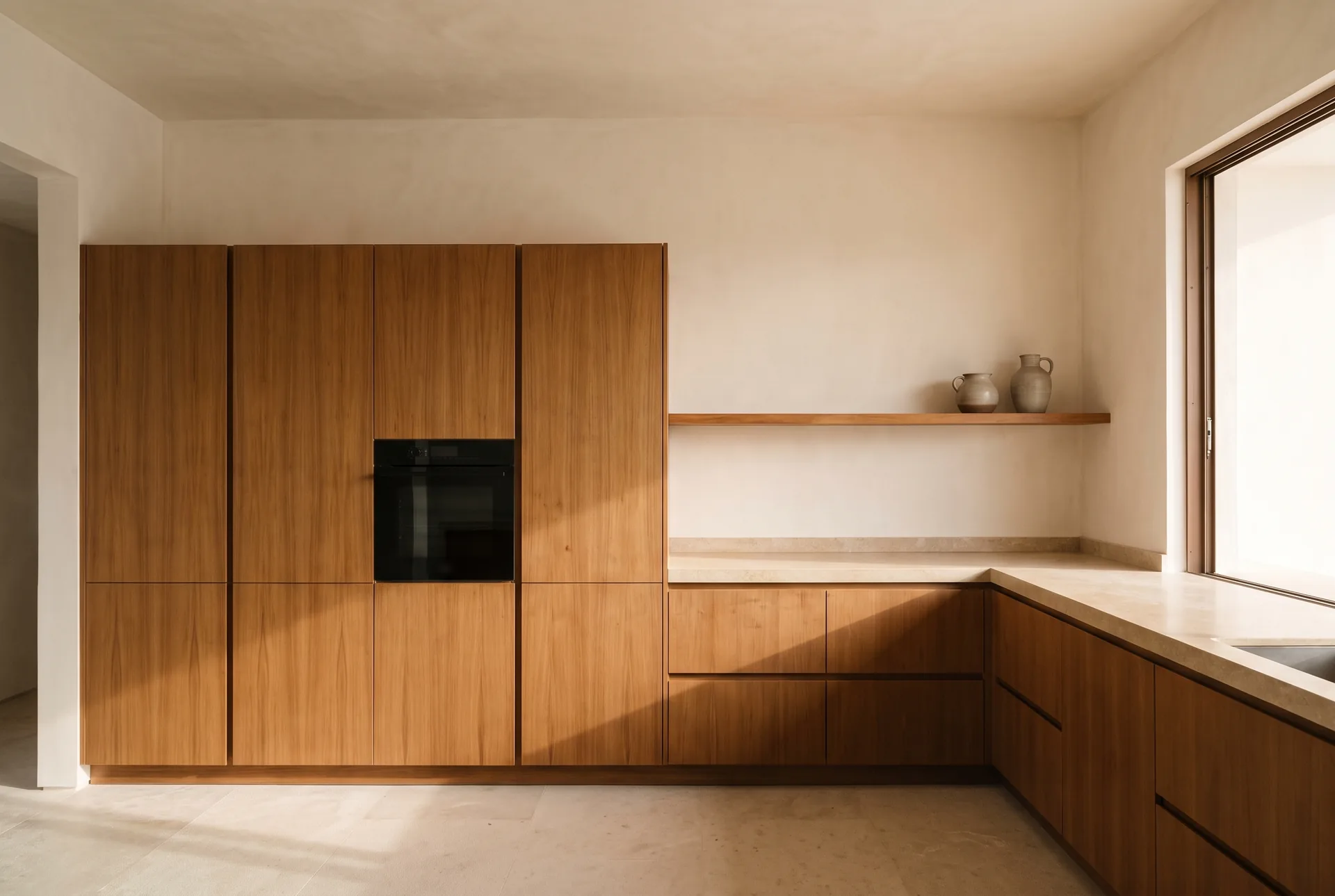
Kitchen assembly & installation
Kitchen cabinets and units assembled and installed — aligned, fixed, and finished ready for daily use.
Explore service
Tell us what you need built or installed.
Send a few photos and measurements — we'll get back to you with next steps.