
Moving furniture to a new villa: what comes with you and what stays
Published by Chaingkiat & Furniture — Nearly 30 years of hands-on carpentry, with our own workshop and crew on Koh Samui. · · 9 min read
Walk through a villa you are leaving and the furniture sorts into two piles almost immediately: things that stand on their own feet, and things screwed to the house. It is the pile in between that causes the arguments, and almost all of it looks portable because it came out of a box once.
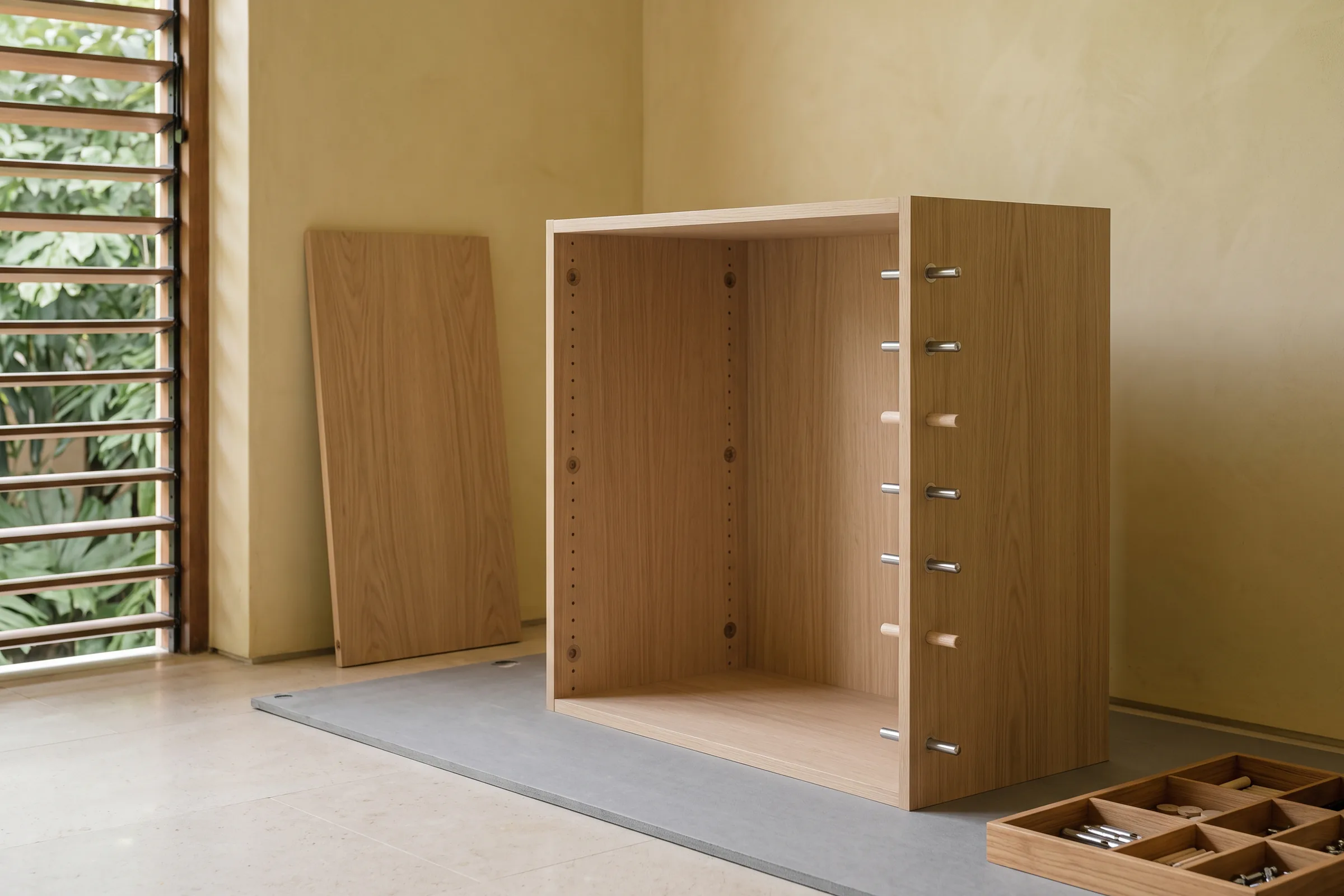
What decides a move is rarely the size of the truck. It is the way each piece was put together, because a move asks every item the same thing: can you come apart and go back? Whether a wardrobe should have been built in at all is the choice this problem should have changed, and dismantling a piece and putting it back together at the new address is the part of a move we do.
Three categories decide everything
Sort by how a piece relates to the building rather than by what it is. Freestanding furniture touches the walls only incidentally — a dining table, a sofa, a chest of drawers, a bed — and it moves because moving it is the only thing it was ever asked to do.
Knock-down furniture is the middle category and the one that needs thinking about. It was flat once, and it reached its current shape through fittings designed to be done up a specific number of times. The cam lock and the dowel are good engineering with one shared assumption: assembly happens once, correctly, and then the piece stays assembled.
Fixed joinery is the third category, and the answer there is usually already decided. A piece scribed to a wall, levelled on packers and screwed into masonry is part of the building that happens to be made of wood. Taking it out does not give you furniture — it gives you panels cut to the shape of a room you no longer live in.
A way of deciding, not a verdict on your furniture
What usually travels, what stays with the building, and what depends
| What you own | Comes with you, stays, or depends — and why |
|---|---|
| Fitted wardrobes and built-in storageScribed, packed level and fixed to one set of walls. The internals are worth taking; the shell comes out as panels cut to a room you are leaving. | Stays |
| A fitted kitchen, bought or builtCarcasses bolted into one run and a top measured off those exact units. Nothing about it is sized for the next room; the appliances are the part that moves. | Stays |
| Flat-pack carcassesCam locks and dowels grip the board fibres around a bored hole, and they grip a second time less well. A carcass built square comes apart tidily; one built in a hurry has already spent its tolerance. | Depends |
| Bolted beds, tables and shelf unitsBarrel nuts and knock-down corner fittings were designed to be undone, which is exactly what a second assembly needs. | Usually comes with you |
| Glued solid-timber piecesA dovetailed drawer or a mortise-and-tenon frame is one object. The question is the doorway and the stair turn, not the joinery. | Comes with you, whole |
| Mirrors, glass shelves and stone topsThese survive the journey or they do not, and dismantling changes nothing either way. Travel them separately and on edge; a replacement is a mainland order. | Depends, and not on us |
| Anything already swollen at its baseA soft bottom edge will not hold a fixing a second time, so the piece arrives at a better house with the same fault. | Leave it |
Our part of a move is the joinery: taking pieces apart, keeping the hardware labelled, and reassembling at the new address. The packing, the vehicle and the journey itself belong to a removals firm.
What a built-in actually is, and why it stays
A built-in wardrobe is not a wardrobe standing against a wall. Its side panels are scribed to the plaster, its base is packed level on a floor that falls, its back is fixed into block, and the filler at the end was cut to a line pencilled off that particular wall. Every one of those operations was a decision about one room.
Which is why the honest answer is almost always that it stays. The panels can be unscrewed, and they come out as panels: a scribed edge that matches nothing, a carcass with no square side left. The internals are worth more than the shell — rails, shelves, drawer boxes, baskets and good hinges come out intact and can be reused in whatever gets built at the other end, and that is often the only part worth loading.
There is a second reason worth naming plainly, because people in rented villas discover it at the worst moment. A fitted piece is a home improvement rather than a possession, and its value went into the property the day it was installed. If the villa is rented, that value belongs to the landlord, whatever the invoice says.
Knock-down carcasses and the one-disassembly rule
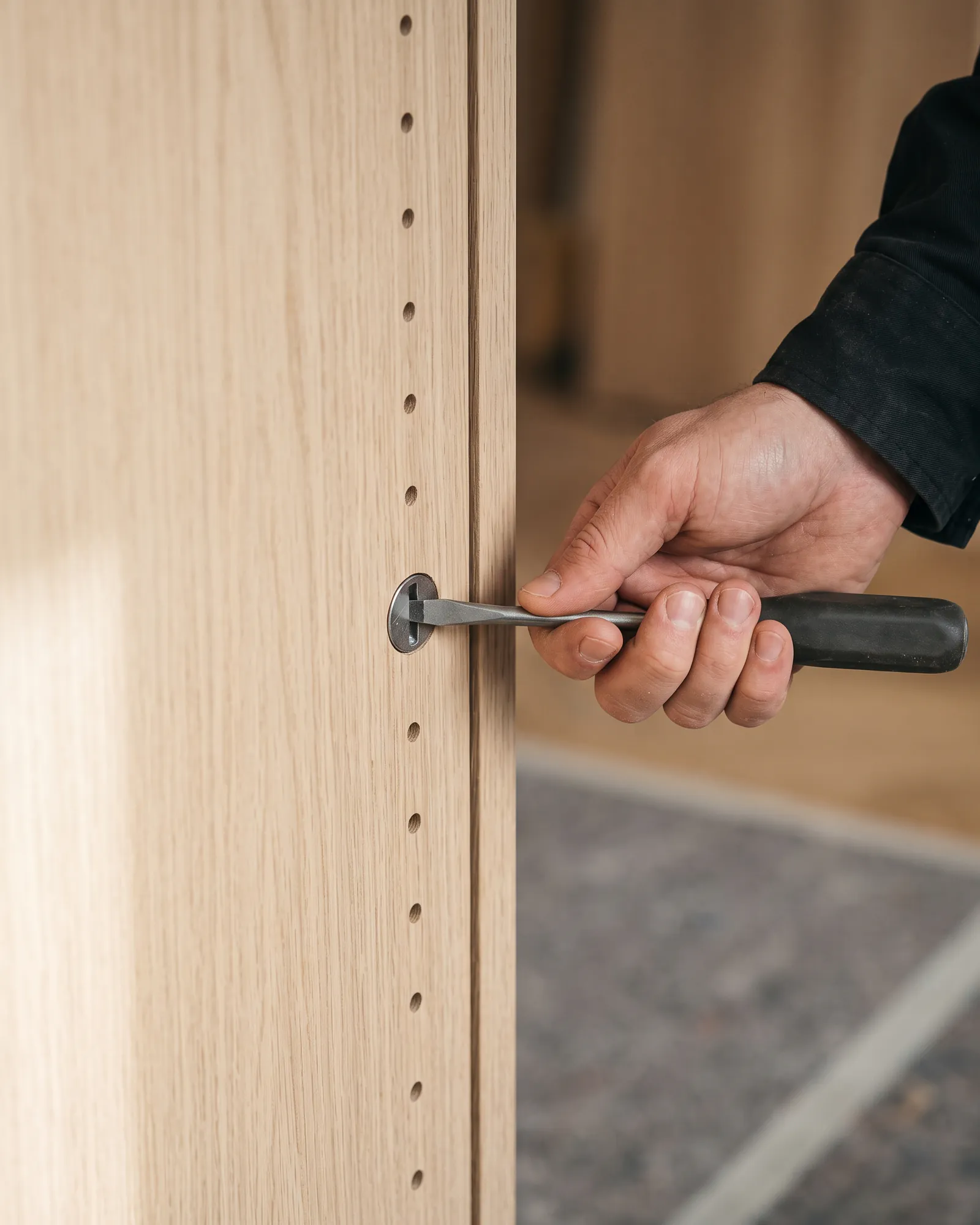
Cam-and-dowel construction survives roughly one careful disassembly. That is not a slur on flat-pack; it is what the fittings are for. A cam lock grips by rotating a steel disc onto a bolt screwed into a hole bored in particleboard, and the holding power is the board fibres around that hole. Undo it and do it up again and the fibres are less willing. Dowels are worse: a glued dowel was never meant to come out, and the half that stays behind takes board with it.
So the odds are set by how the piece was assembled, not by how carefully it is taken apart. One built square, on a flat floor, with nothing forced, comes apart tidily and goes back together close to as good. One built on a sloping terrace by somebody in a hurry has already spent its tolerance, and taking it apart is how you find out.
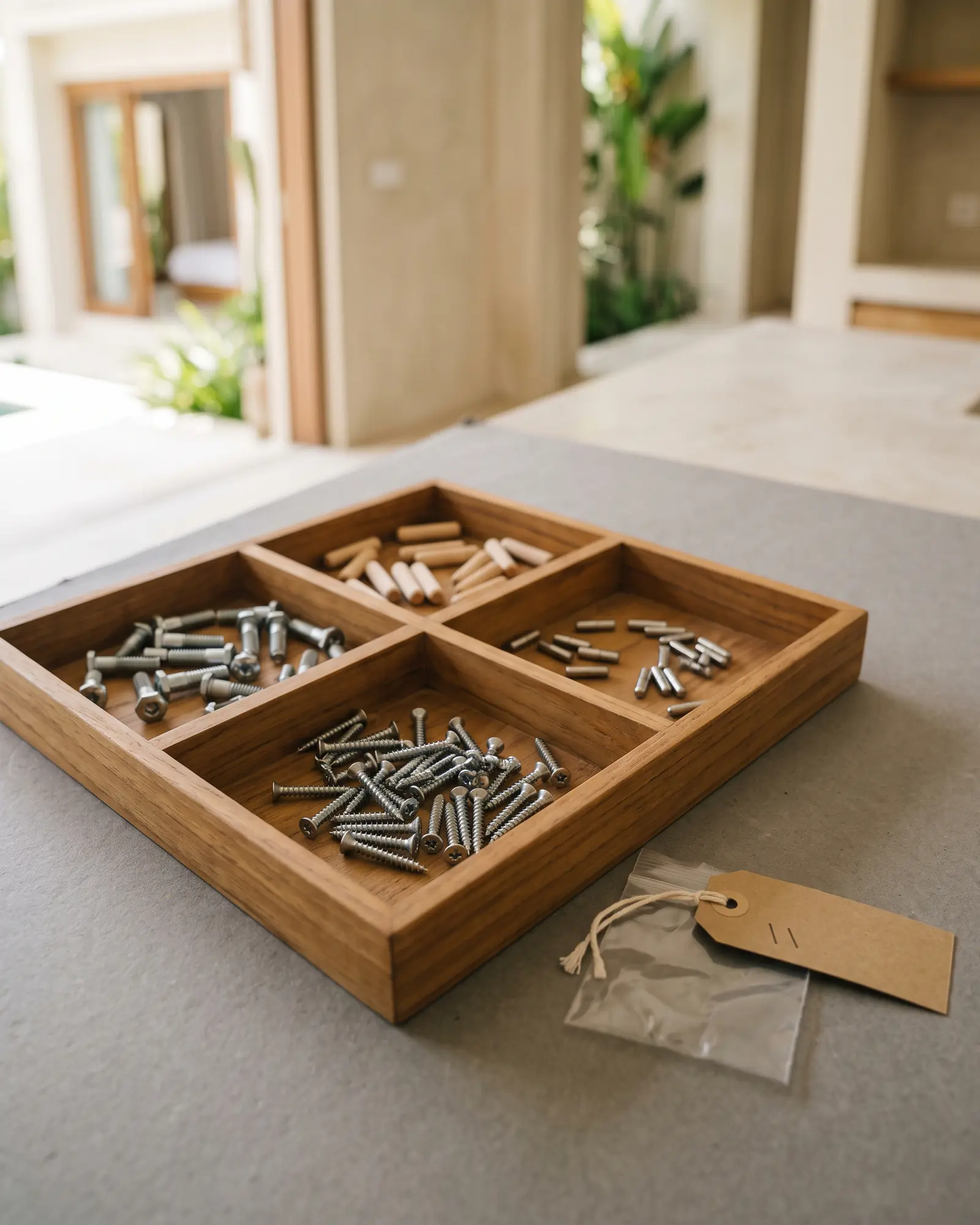
What improves the odds is dull and effective. Every fitting goes back with the piece it came from, sorted and labelled, because wardrobe fittings look alike and are not. Sub-assemblies that do not have to come apart stay together, drawer boxes travel assembled, and nothing is levered. Panels travel on edge rather than stacked flat under weight, because particleboard bends slowly and does not come back. The piece that gets the most care is the back panel, which is what holds the box square. This is also the point to be realistic about which items earn the attention at all, which is really the question buying for the room you are in versus the one after it is about, and the flat-pack range this applies to most covers what replacing a damaged panel involves from here.
Made-to-measure pieces: what comes apart by design
Freestanding furniture made in a workshop usually travels better than flat-pack, for a reason that has nothing to do with quality: it was built to be moved at least once, from the bench to your house, so the joints that have to come apart are bolted rather than glued. A bed frame with barrel nuts, a table whose base unbolts from its top, a wardrobe with a removable back: these come apart along the lines they were made on and go back together to the same tolerances.
The pieces to leave assembled are the ones whose joints are glued, which in solid timber is most of the good ones. A mortise-and-tenon chair frame, a dovetailed drawer, a glued-up carcass: these are single objects, and the only question is whether they fit through the door. Trying to reduce one for transport is how a repairable chair becomes firewood.
Two categories sit outside the joinery question altogether. Mirrors, glass shelves and stone tops either survive the journey or they do not, and dismantling changes nothing either way; they travel separately and on edge. And anything already swollen at its base, where a bottom edge has stood in mop water for years, will not hold a fixing a second time — moving it buys the same problem into a better house.
The rooms that fight you
Some rooms are mostly fixed joinery, and they are worth walking early so the answer is not a surprise on the day.
The kitchen is the clearest case and the one people get wrong most often, because a bought kitchen feels like a product you own. It is not: it is a run of carcasses scribed, levelled, bolted together and fixed to one set of walls, with a top measured off those exact units. It is the kitchen nobody can take with them, and the only things worth recovering from it are the appliances and sometimes the handles.
Wardrobe and storage internals are the opposite case: the shell stays, the fittings travel. Anything anchored into block or brick leaves fixings behind that need making good, and masonry plugs do not come out reusable. And anything built in place rather than carried in — which here includes a good share of terrace joinery and anything oversized for the stairs — was never a candidate.
Getting it out, and getting it in
A piece that came in before the doors were hung does not necessarily go out the way it arrived. Walk the route in both villas before deciding anything: the room doorway, the corridor turn, the stair width and headroom at the turn, the gate, and the last stretch of access road, which on a Koh Samui hillside is often the thing that decides it. A full-height carcass either turns the corner or does not, and it is the diagonal rather than the height that has to clear.
Here is the plain version of what we do and do not do, because it matters more on this subject than on any other page here. We are a carpentry workshop and a fitting crew. We take furniture apart, keep the hardware labelled, and reassemble it at the new address. We do not move anything between the two addresses. The packing, the vehicle and the lifting between buildings belong to a removals firm, and you should book one. What we can do is tell you, before you book, which items on your list are going to cause an argument, and which should not be loaded at all.
Furniture assembly & installation
Flat-pack and imported furniture assembled, levelled, and anchored safely — beds, wardrobes, desks, and more.
Explore serviceWhat happens at the other end
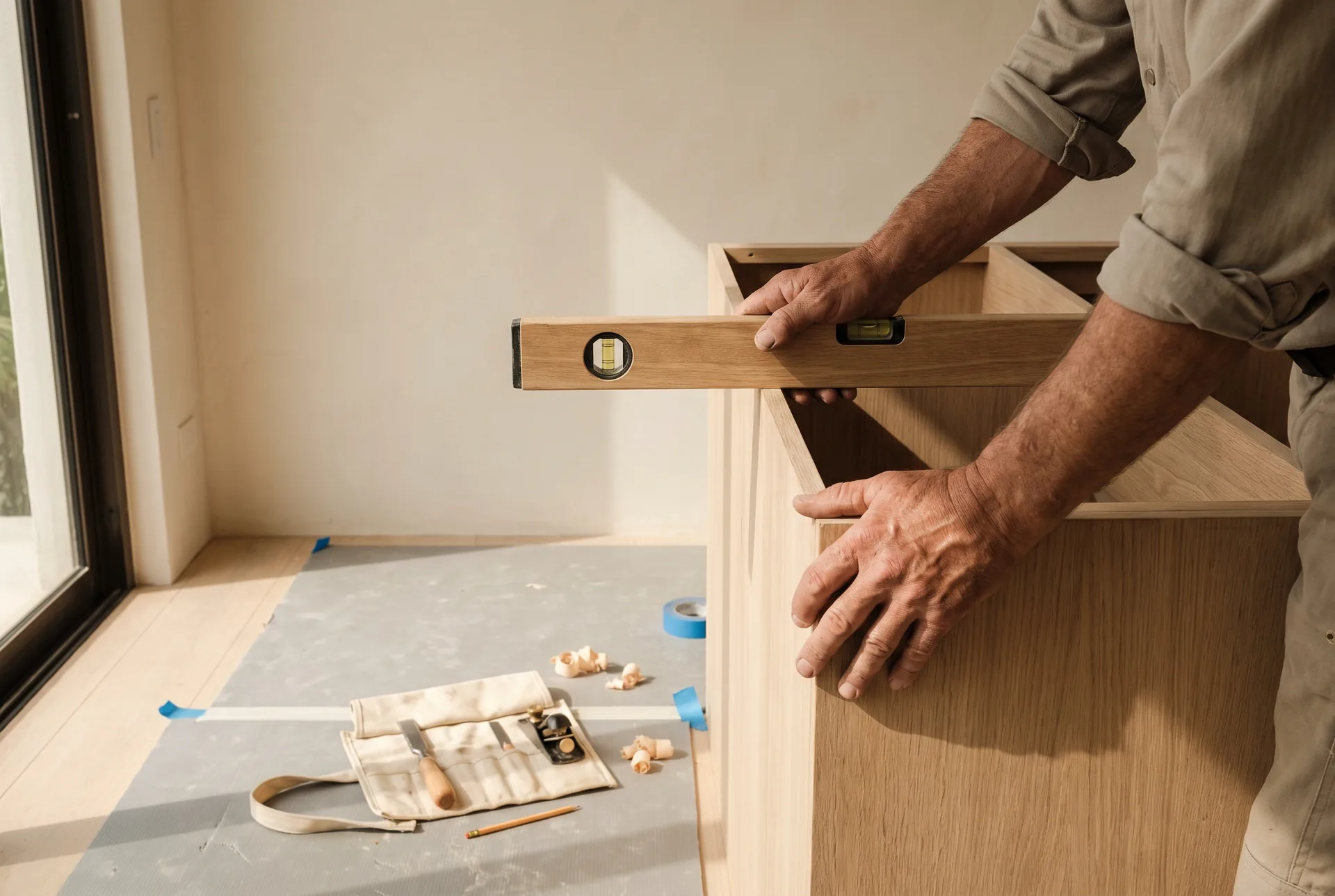
Reassembly is not the reverse of disassembly, because the room is different. The new floor falls a different way, so every piece gets levelled from scratch rather than from the packers it arrived with. The new walls are a different build-up, so a tall unit anchored into block may now be going into something else, and the fixing is chosen for that wall rather than reused. And a carcass that spent a journey on its back gets checked for square across both diagonals before anything is tightened — not after the doors refuse to line up.
The faults that show up at this stage are usually movement faults rather than breakages: a drawer that now catches at one corner, a door with a tapering gap, a wardrobe that rocks on a tile it did not sit on before. Most of them are adjustment rather than repair. The day itself runs the way any assembly day runs, and how the reassembly day runs at the other end is the detail of that, from protecting floors to the final level. Where something has genuinely been damaged rather than knocked out of adjustment, where damage found in transit gets triaged is the right next step rather than a guess with a screwdriver.
One quiet piece of advice: reassemble the bedrooms first. The pieces that make a house usable need the most patience, and get the least of it at the end of a long day.
What was left behind, and what the new rooms need
Most people arrive at a new villa with the loose furniture and without the storage, because the storage was the part that was built in. That is worth planning for rather than discovering: the new bedrooms have walls and no wardrobes, and the old internals are in a box in the garage.
Which is a better position than it sounds. The rails, shelves, drawer boxes and hinges you kept are the expensive half of a wardrobe, and a new shell can be built around them for the room you are in now. having new built-ins made for the new rooms is the other half of this conversation, and it is usually the one that gets the house finished. For the loose pieces that did not survive the sort, buying replacements from the mainland after a move is a journey with a guide of its own.
So the decision, piece by piece, is less about sentiment than about how each thing was put together. Freestanding travels. Bolted travels. Glued travels whole or not at all. Scribed and fixed stays. And the only honest version of the list is the one made while looking at the actual furniture, which is why a useful first message mentions both addresses and what is in the rooms rather than asking what it costs to move a house. That part is not ours to quote on.
Related guides
- Furniture assembly & installation
Getting furniture assembled on Koh Samui: a practical guide
How furniture assembly works on Koh Samui: flat-pack and imported deliveries, what to prepare, anchoring on concrete walls, and when to call a professional fitter.Read the guide - Built-in wardrobes & cabinets
Built-in or freestanding wardrobe: which suits a tropical bedroom?
Built-in or freestanding wardrobe? How the two compare on space, humidity, cost logic and flexibility in a tropical bedroom, and when each one wins.Read the guide - Custom furniture & carpentry
Custom vs ready-made furniture: which fits your villa?
Custom or ready-made furniture for a Samui home? How they compare on fit, durability in island humidity, and when a bought piece is the smarter choice.Read the guide
Related services
Furniture assembly & installation
Flat-pack and imported furniture assembled, levelled, and anchored safely — beds, wardrobes, desks, and more.
Explore service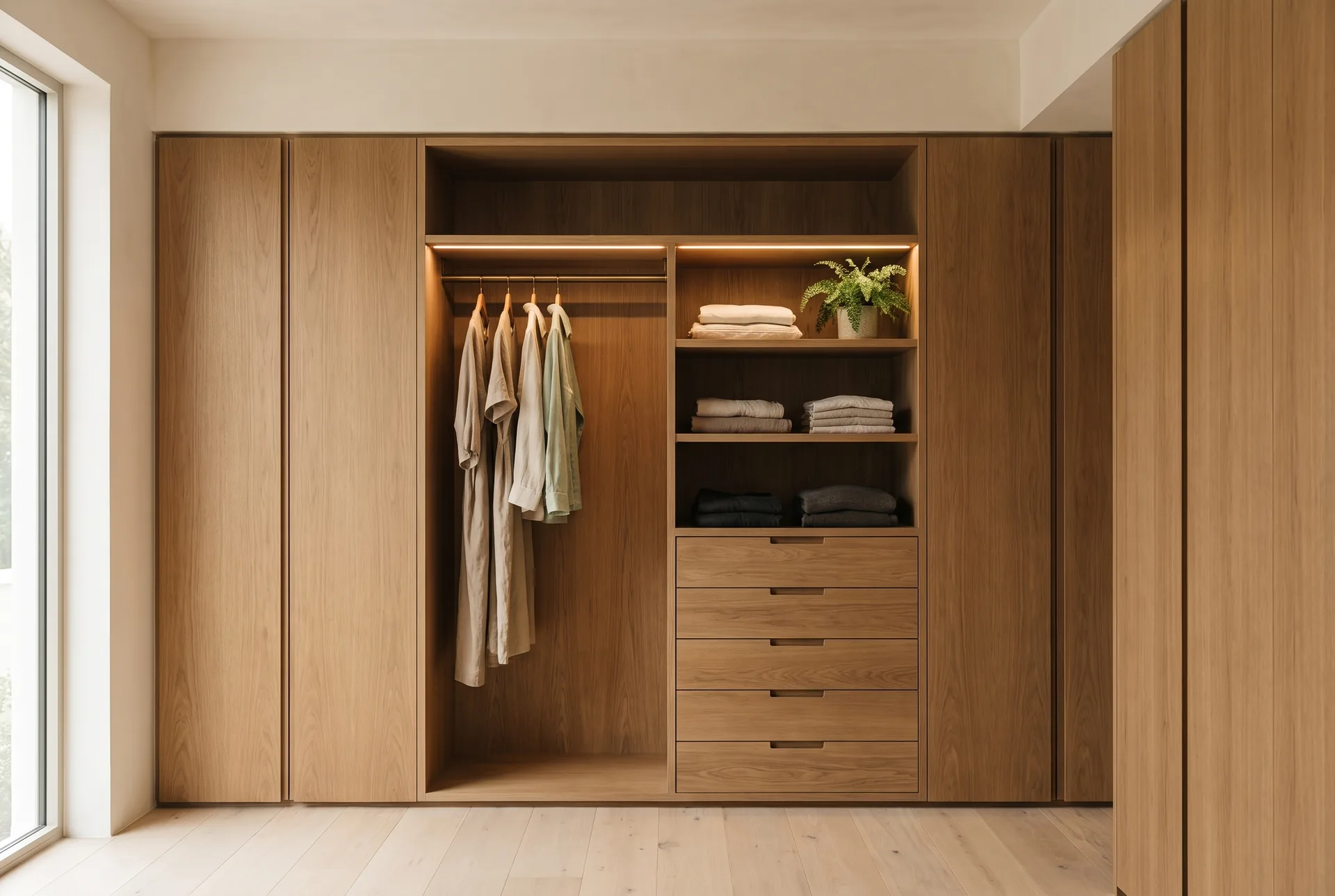
Built-in wardrobes & cabinets
Built-in wardrobes, closets and storage cabinets that use every centimetre. Measured, built, and installed.
Explore service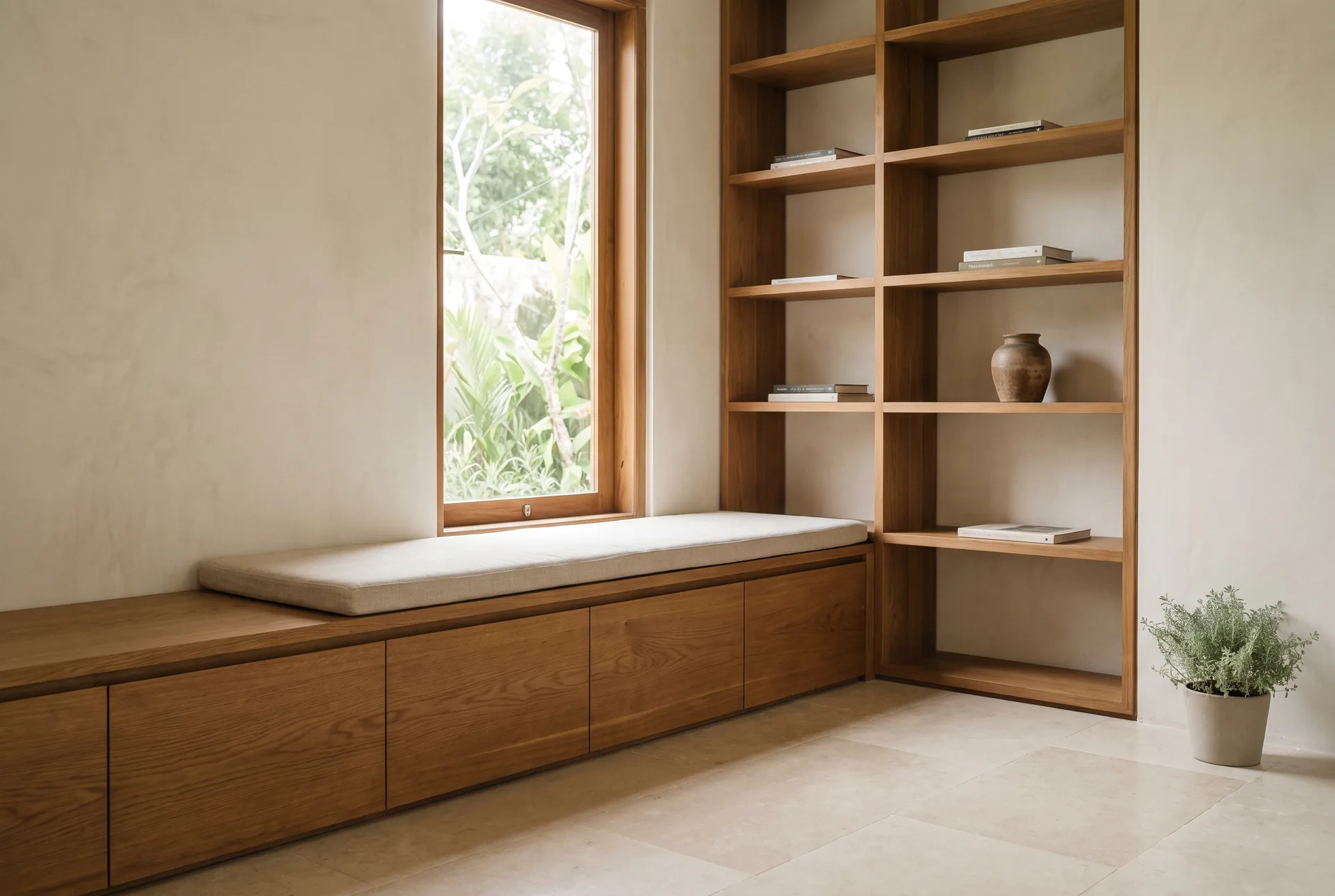
Custom furniture & carpentry
Made-to-measure furniture and woodwork designed and built for your space, from single pieces to full fit-outs.
Explore service
Tell us what you need built or installed.
Send a few photos and measurements — we'll get back to you with next steps.