
Built-in or freestanding wardrobe: which suits a tropical bedroom?
Published by Chaingkiat & Furniture — Nearly 30 years of hands-on carpentry, with our own workshop and crew on Koh Samui. · · 5 min read
Most comparisons of built-in and freestanding wardrobes are written for temperate bedrooms, and they read like a style debate. In a tropical bedroom the question is not stylistic. Humidity, concrete walls and the price of floor area change the trade-offs enough that the standard advice needs redoing, and that is what this guide does: the same comparison, run honestly, for the climate this island actually has.
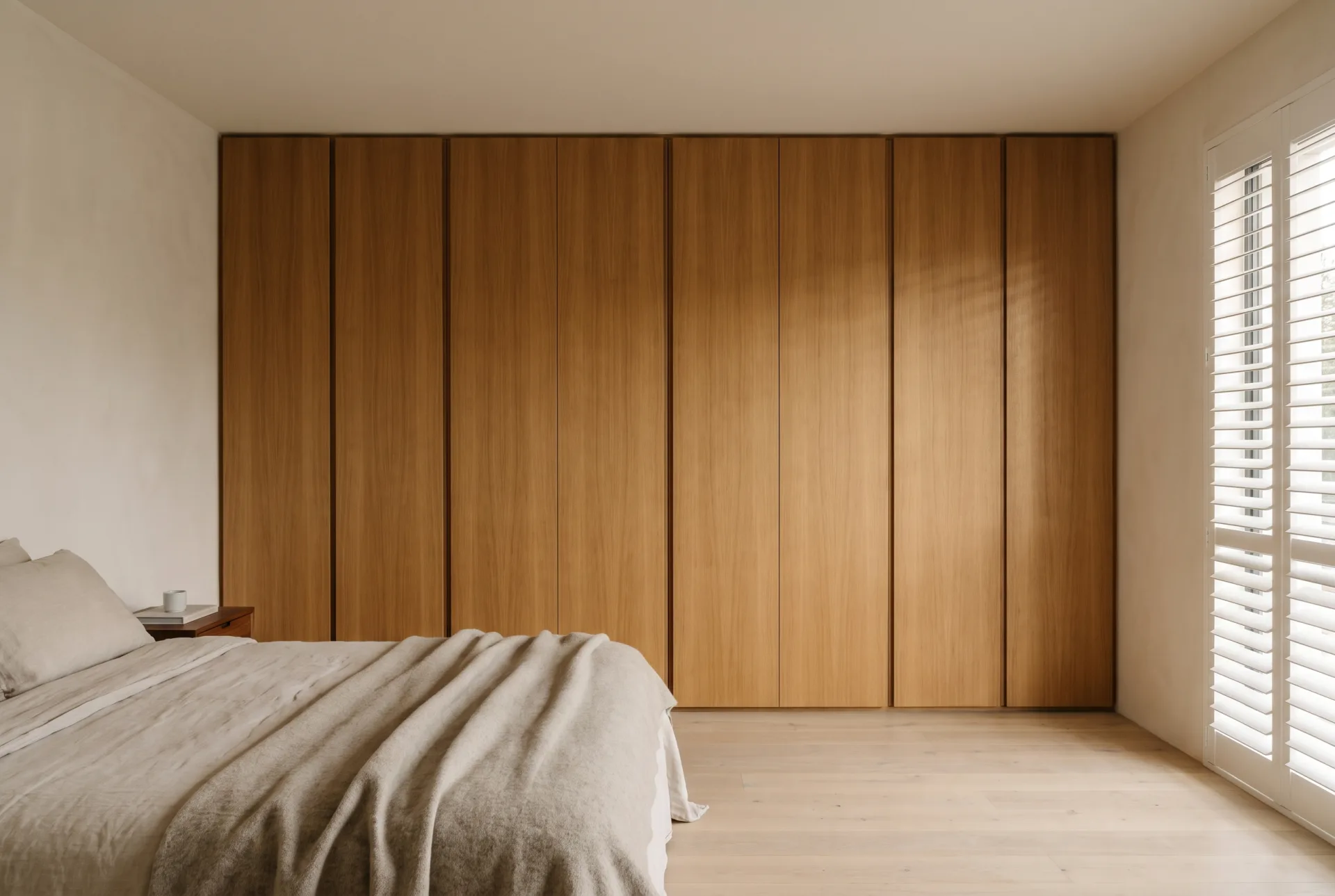
A disclosure first: we build fitted wardrobes, so we have a side. The comparison below still lets freestanding win where it genuinely wins, because a wardrobe sold into the wrong situation comes back as a complaint.
The real difference is the air gap
Strip away styling and one physical difference drives everything: a freestanding wardrobe stands in the room's air, a built-in becomes part of the wall. Each behaves differently in a humid climate, and neither behaviour is automatically better.
The freestanding piece keeps an air gap behind it, and moving air is the cheapest mould prevention there is. But that same gap, pushed tight to save space, becomes the worst spot in the room: a still, dark slot against a warm outer wall where damp and dust settle and nobody cleans. The built-in has no gap to mismanage, and that is exactly its risk. Done casually, it traps wall moisture against unsealed board with no escape. Done properly, with every face sealed and ventilation designed into the cabinet, it is the more controlled environment of the two. In short: freestanding forgives careless building, built-in punishes it. Which is worth remembering when comparing quotes.
The space arithmetic
Here the built-in wins on plain geometry. A freestanding wardrobe is a box in a room: it stops short of the ceiling, stands clear of the walls, and its top becomes a dust shelf you need a chair to reach. In a bedroom with ceilings around three metres, the volume above a standard two-metre wardrobe is an entire luggage-and-linen store that simply goes unused. The contrast is easy to see among the freestanding and fitted pieces in real bedrooms we have photographed.
A fitted wardrobe takes the full height and the full width of its wall, swallows awkward alcoves that no catalogue size matches, and puts the rarely-used third of your storage overhead where it costs nothing. In a compact bedroom the same clothes fit in visibly less floor, which in a small room is the difference between a bedroom and a corridor with a bed in it. You can see the effect in the full-height fitted doors from real bedrooms in our portfolio: the wardrobe reads as a wall, not as furniture occupying one.
What the money buys in each case
A freestanding wardrobe is a product: factory-made in standard sizes, priced on a tag, delivered fast, and cheaper for the equivalent volume, with the trade-offs living quietly in the materials and hardware the price point allowed. A built-in is a service: someone measures your wall, draws your cabinet, builds it and installs it, and you pay for that attention. Comparing the two on price alone is comparing a shirt off the rack with one cut for you; the numbers describe different things.
This guide deliberately holds no figures. What a fitted wardrobe costs turns on size, materials, hardware and finish, and we keep the full breakdown of how commissioned work is priced per project in its own guide. The honest summary: built-in almost always costs more up front, and repays it in space and longevity only if you stay put long enough to collect.
Built-in wardrobes & cabinets
Built-in wardrobes, closets and storage cabinets that use every centimetre. Measured, built, and installed.
Explore serviceFlexibility, tenancy, and the day you move
A freestanding wardrobe moves house with you, sells second-hand, and can migrate to the guest room when plans change. A built-in cannot. It is a home improvement, not a possession: it stays with the wall it was made for, and its value transfers to the property rather than travelling with you. On an island where many people rent, that single fact settles a lot of decisions. Fitting a wardrobe into a landlord's bedroom is a gift to the landlord, and few tenancies deserve one. For the piece-by-piece version of that, what actually happens to each kind on moving day goes through a whole house.
Ownership flips the logic. A fitted wardrobe is one of the few furniture purchases that shows up at resale and in rental listings, because storage that belongs to the room photographs as a finished home rather than a furnished one.
The honest verdict
Freestanding wins if you rent, if you expect to move within a few years, if the room must stay rearrangeable, or if the budget simply is not there yet; a decent freestanding wardrobe now beats a cheap built-in forever, because the cheap built-in is the one that grows mould and cannot be taken back. It also wins in rooms with good straight walls and standard dimensions, where a catalogue size genuinely fits and the built-in's tailoring has less to earn.
Built-in wins if you own the home and intend to stay, if the bedroom is small enough that floor area is precious, if the wall in question is awkward, angled or interrupted, and above all if you are already fighting humidity: a properly built fitted wardrobe is the only version of "closed storage that stays dry here" you can specify rather than hope for. Villas being furnished for long-term rental sit in this camp too, since the wardrobe outlasting a dozen tenants is precisely the point.
If you build in, get these right
A verdict for built-in is really a verdict for a well-built built-in, so hold whoever builds yours to the details that decide how it ages: ventilation designed into the cabinet rather than added after the first musty season, sealing carried right through to the panel backs and the cut edges, hardware chosen to survive years of humid air, and an interior laid out around what you actually hang and fold. We keep a full planning guide on what a fitted wardrobe must get right in a tropical bedroom for exactly this stage.
And insist on real measurement. The whole promise of wardrobes built into the wall by the millimetre rests on someone standing in your bedroom with a tape and a level before anything is priced or cut. That is how we work, and it is a fair thing to demand of anyone else quoting against us.
Related guides
- Built-in wardrobes & cabinets
Designing a built-in wardrobe for a tropical home
How to plan a built-in wardrobe for a tropical home: ventilation and mould prevention, layouts for awkward spaces, and choices that survive island humidity.Read the guide - Built-in wardrobes & cabinets
Stopping mould in wardrobes and closed storage
Why mould grows inside wardrobes and closed storage in humid climates, and how to stop it: airflow, moisture sources, finishes, and when to rebuild.Read the guide - Custom furniture & carpentry
Custom vs ready-made furniture: which fits your villa?
Custom or ready-made furniture for a Samui home? How they compare on fit, durability in island humidity, and when a bought piece is the smarter choice.Read the guide
Related services
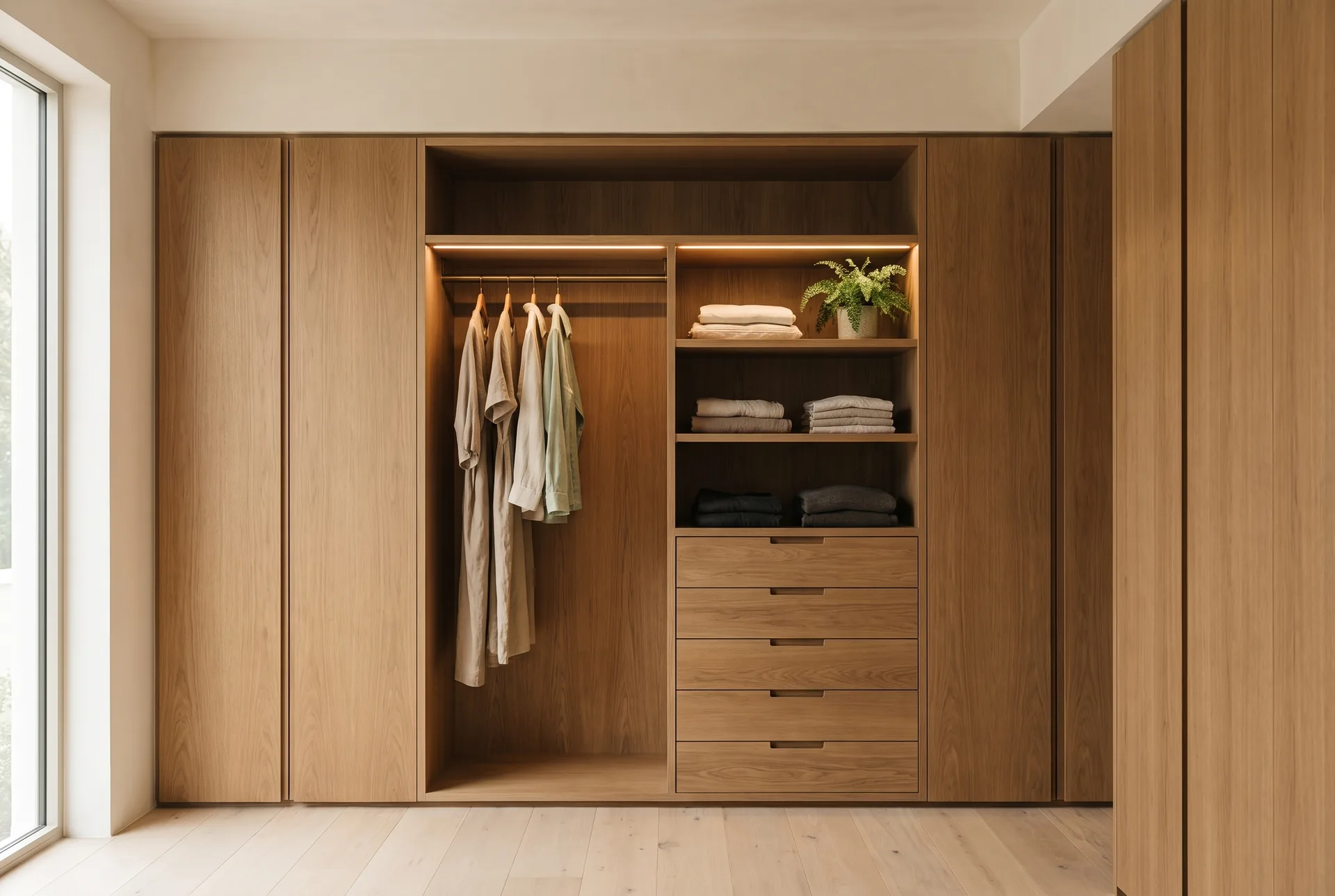
Built-in wardrobes & cabinets
Built-in wardrobes, closets and storage cabinets that use every centimetre. Measured, built, and installed.
Explore service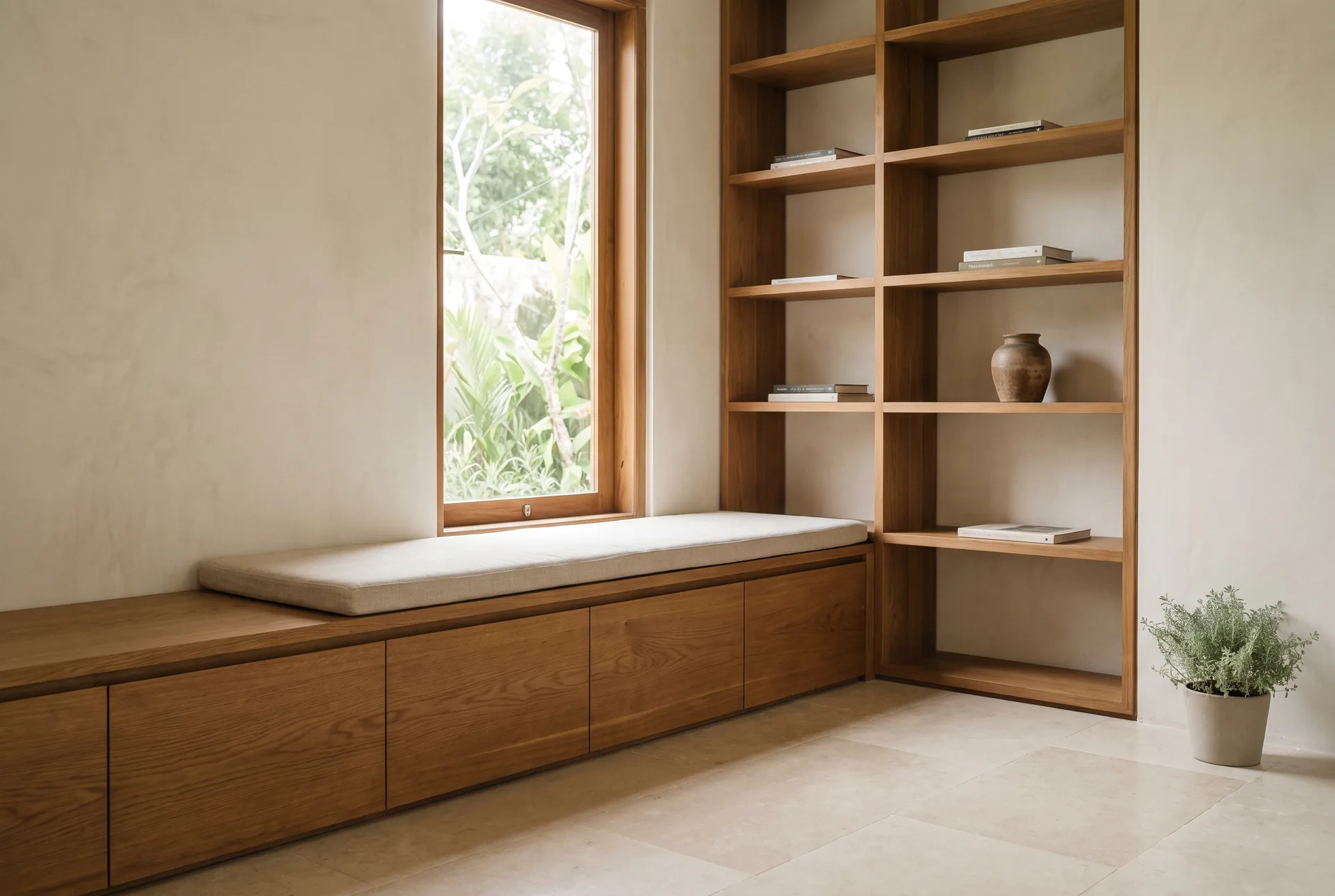
Custom furniture & carpentry
Made-to-measure furniture and woodwork designed and built for your space, from single pieces to full fit-outs.
Explore service
Tell us what you need built or installed.
Send a few photos and measurements — we'll get back to you with next steps.