
Stopping mould in wardrobes and closed storage
Published by Chaingkiat & Furniture — Nearly 30 years of hands-on carpentry, with our own workshop and crew on Koh Samui. · · 7 min read ·
The smell arrives before the stains. A wardrobe that has been closed through a few wet-season weeks opens with that unmistakable musty note, and by the time grey-green spots show on a leather bag or the back panel, the colony is established. If this is your wardrobe, you have plenty of company on this island, and the problem is fixable. It is also, in most cases, not really about the wardrobe.
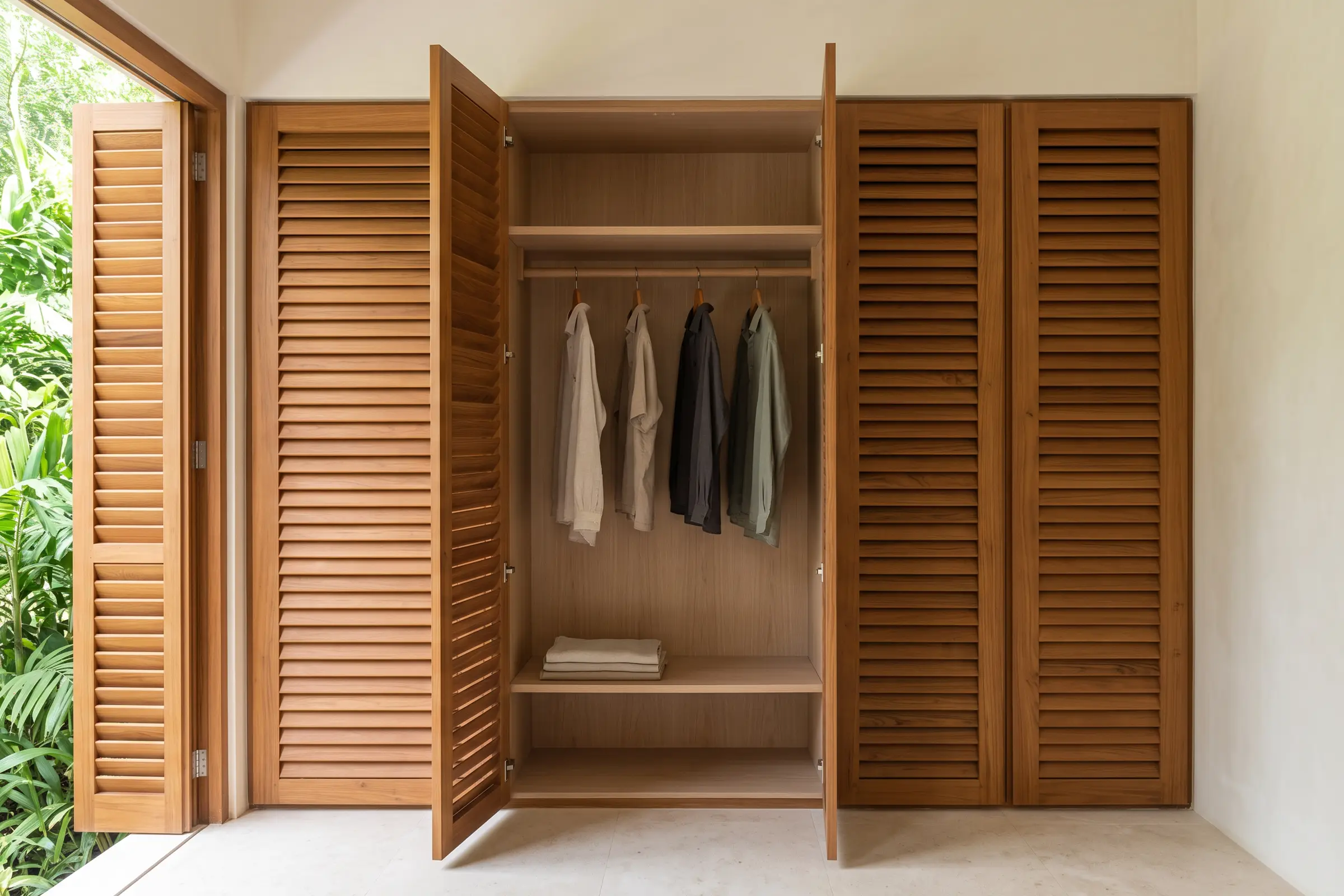
We build storage for this climate for a living, so this guide is deliberately practical: what is happening inside the cabinet, how to trace the moisture feeding it, how to clean it off without ruining the finish, and how to tell the rare case where the cabinet itself has to go.
Why the wardrobe is always first
Mould needs three things: spores, food and sustained damp. The first two are everywhere; spores ride the air and dust, skin oils and wood itself are food enough. Damp is the only variable you control, and a closed wardrobe is the dampest air in the house that never moves.
Here is the mechanism. Island air spends months heavy with moisture. Clothes and shoes are hygroscopic: they pull that moisture in and hold it. Shut the doors and you trap a parcel of humid air with a slow-release moisture supply and no circulation at all. Then air conditioning makes it worse in a way that surprises people. Cool the bedroom hard at night and the wardrobe's contents chill; switch the unit off in the morning and warm humid air flows back in and condenses on every cool surface inside. Run that cycle daily and the inside of a closed cabinet stays damp for months. The room feels fine. The wardrobe never dries.
Find the water before you blame the cabinet
Before treating anything, work out what is feeding the damp, because a cleaned wardrobe with an unfixed moisture source is mouldy again within a month. Walk through the suspects in order. Is the wardrobe standing against an external wall, or worse, a bathroom wall? Masonry passes moisture straight through, and the cold face of an air-conditioned room's outer wall is exactly where condensation forms. A cabinet inside the bathroom is a different brief again, and cabinets that live in the wet room itself is written for that case. Is anything going in not fully dry: laundry that felt dry on the line, a towel, gym shoes, a rain-caught jacket? One damp item can hold a whole cabinet's humidity up for days.
Check the room too. Grout cracks and window leaks announce themselves as a mould patch that keeps returning in one corner regardless of what you do inside the cabinet. If the stain maps to one spot on the wall side of the wardrobe rather than spreading evenly, the wall is talking, and no amount of cabinet care will out-clean a leak.
Cleaning it off without wrecking the finish
On a lacquered or painted surface, mould sits on top of the finish, and gentle wins. Wipe with a cloth wrung out in warm water with a little detergent, or with diluted white vinegar; dry the surface immediately and leave the doors open until every trace of dampness is gone. Skip the harsh route. Neat bleach can blotch lacquer and does nothing for the conditions that grew the mould, and aggressive scrubbing cuts through the very coating that was protecting the board.
Raw or unsealed wood, usually the hidden faces, is harder, because the growth roots into the surface fibres. Vinegar, time to dwell, then a light sand once fully dry will lift most of it; a grey shadow left in the grain is dead staining, not live growth. Any surface that came up raw should then be sealed, since bare board inside a humid cabinet is simply the next colony's food. Wear a mask for the sanding. Mould dust is not something to breathe.
Rescuing the clothes, the shoes and the smell
The cabinet is only half the cleanup, because everything stored in it has been breathing the same damp air. Washable fabrics are the easy case: a normal wash, then real drying — sun and moving air, not a shaded rail — and the mustiness leaves with the moisture. Anything visibly spotted gets washed separately and checked after drying, because a stain that survives the wash has gone from surface mould to dye damage, and nothing brings that back. Shoes and bags want a dry brushing outdoors first, so the spores leave the house rather than just the shelf.
Leather needs gentler hands: a barely damp cloth, a slow dry away from direct sun, and a feed afterwards, because the wipe takes oils out along with the mould. The smell itself is the last thing to go, and it lives in trapped damp, not in the fibres — so airing beats any perfume. An afternoon of open doors and sunlight on a dry day does more than a shelf of fragrance sachets, which only ever negotiate with the symptom.
Teaching an existing wardrobe to breathe
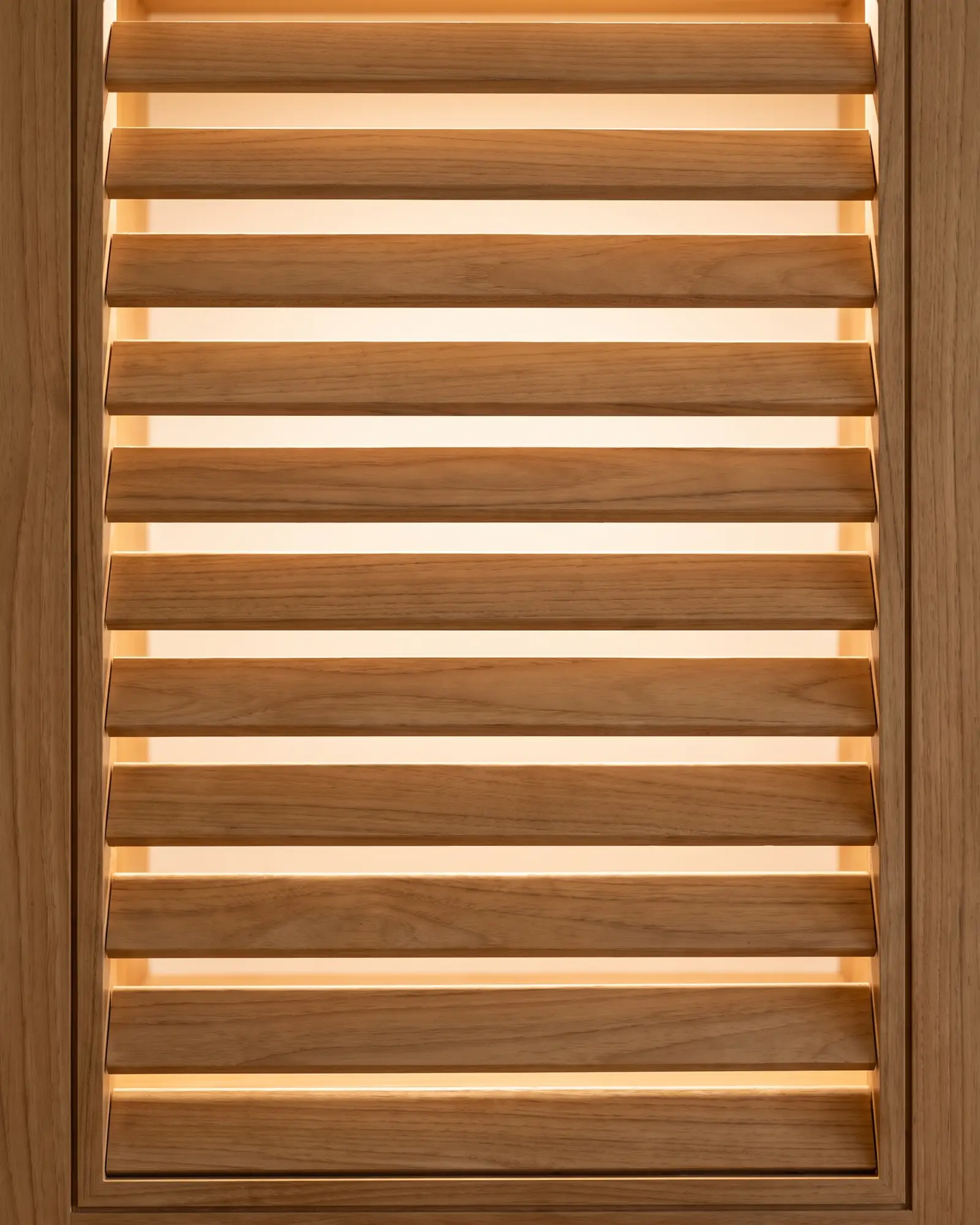
Now change the conditions, because cleaning treats the symptom. The lever is airflow, and a wardrobe you already own has more retrofit options than people expect. Round soffit vents drilled into the top and bottom of the side panels or doors set up a slow convection path; a carpenter can fit louvred inserts into door panels for the same effect with a tidier face. Even low-tech moves help: stop pressing clothes into a solid block, keep everything a hand's width off the back panel, and leave the doors open for an hour after the room's air conditioning stops.
Support the airflow with dryness. A small dehumidifier run in the bedroom a few hours a day does more than any quantity of moisture-absorber boxes, though the boxes are a fair signal: if they fill fast, the room itself is the problem. A low-wattage cabinet rod or an LED strip that adds gentle warmth keeps internal surfaces above the temperature where condensation forms. And if the piece stands against an external wall, pull it a few centimetres off it. That air gap matters more than any product you can buy, and it is also worth knowing which boards shrug off damp air when you next choose furniture for a room like this.
Built-in wardrobes & cabinets
Built-in wardrobes, closets and storage cabinets that use every centimetre. Measured, built, and installed.
Explore serviceThe habits that decide whether it comes back
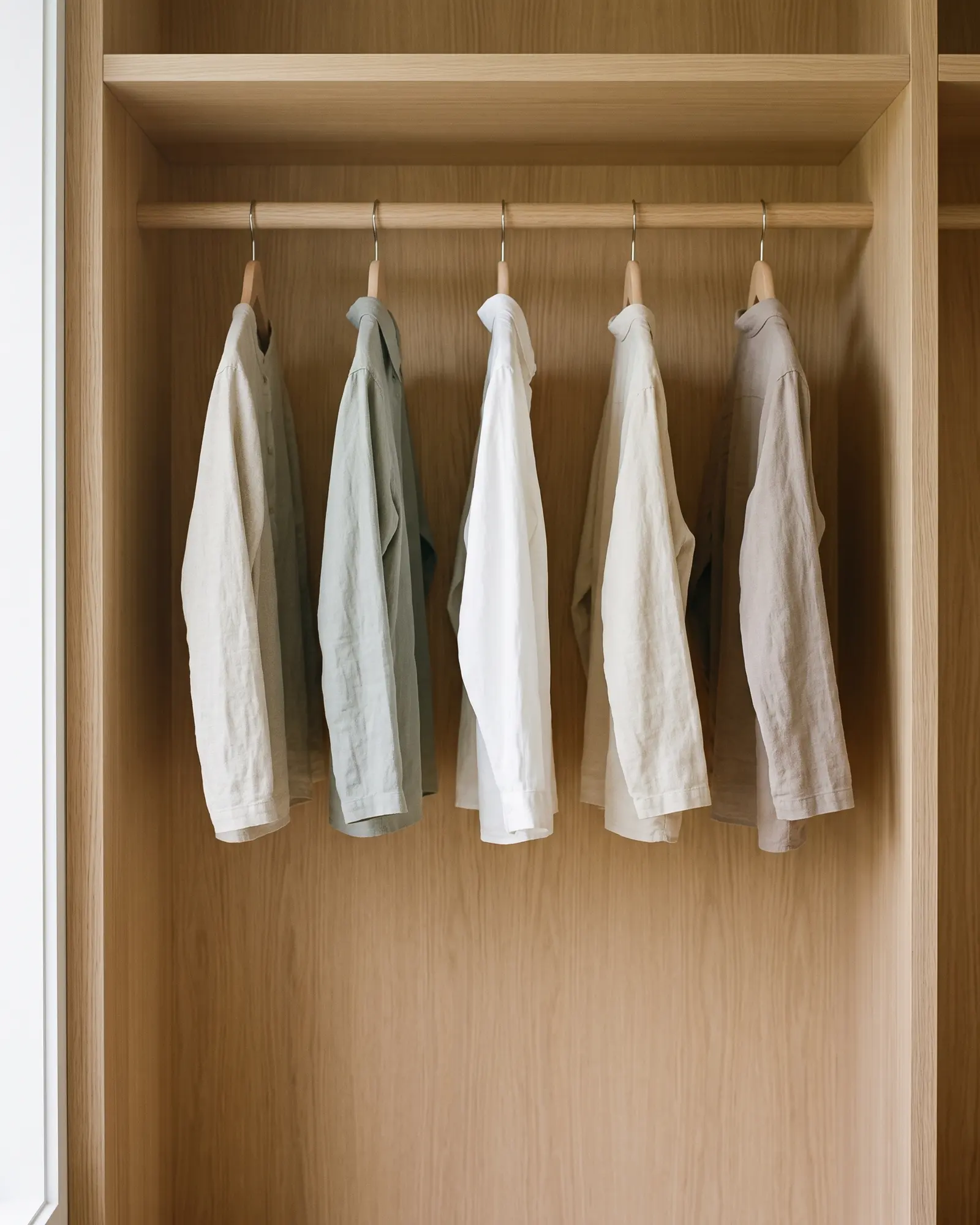
Everything above can be undone by routine. The rules that matter are few and boring, which is why they work. Nothing goes in damp, ever; on this island "dry from the line" during the wet season often is not. Leather lives on open shelves or in breathable bags, never sealed in plastic, which traps exactly the microclimate mould wants. Wardrobe doors get opened wide for a while on dry days. And once a month, put a nose into the closed cabinet: smell is your earliest instrument, and it will tell you about a problem weeks before your eyes do. These habits are the wardrobe-sized slice of the wider routine that keeps humidity off your furniture.
When the house stands empty
Closed storage suffers most in a house that stands locked and empty — a villa shut for the low season, a holiday home between visits. Windows shut, air conditioning off, every cabinet closed: that is weeks of still, saturated air with nobody there to smell the warning. If a stay ends with a locked gate, end it with the wardrobe doors wide open, clothes thinned out rather than packed solid, and nothing leather left inside.
If someone checks the house while you are away, put the wardrobes on their list: doors opened on each visit, a dehumidifier run in the bedrooms for a while, a glance at the moisture-absorber boxes — boxes that fill fast are the house asking for help. It is ten minutes of routine, and it is the difference between coming back to a bedroom that smells of nothing and starting this guide again from the top.
When cleaning has stopped being the answer
Some wardrobes cannot be saved by habits, because the fault is in the build. The signs are consistent: mould that returns within weeks of a proper clean, board that has swollen or flaked at the edges, backs of cheap coated panel left raw at every cut edge, a carcass screwed hard against an outside wall with no gap and no ventilation anywhere in the design. At that point each cleanup is rent, not a repair.
The fix is a wardrobe rebuilt with airflow designed in: ventilation openings placed for convection, every face and edge sealed including the ones against the wall, and a layout that lets air reach what you store. Built that way, closed storage stops being the dampest corner of the house. The fitted wardrobes built for this climate in our portfolio show what that looks like in real bedrooms rather than in theory.
Next time, design it out
If a new wardrobe is on the horizon anyway, the cheapest mould treatment ever invented is a design that never needs one. Ventilation, sealed faces and sensible placement cost almost nothing on the drawing board and cannot be fully retrofitted later. We have a separate guide on designing the next wardrobe so this never recurs, written from the planning side of the same problem this one fixes.
Related guides
- Built-in wardrobes & cabinets
Designing a built-in wardrobe for a tropical home
How to plan a built-in wardrobe for a tropical home: ventilation and mould prevention, layouts for awkward spaces, and choices that survive island humidity.Read the guide - Built-in wardrobes & cabinets
Built-in or freestanding wardrobe: which suits a tropical bedroom?
Built-in or freestanding wardrobe? How the two compare on space, humidity, cost logic and flexibility in a tropical bedroom, and when each one wins.Read the guide - Custom furniture & carpentry
How to care for custom wood furniture: a practical maintenance guide
A practical care routine for wood furniture: cleaning that doesn't strip the finish, hardware checks, early warning signs, and when to call a carpenter.Read the guide

Tell us what you need built or installed.
Send a few photos and measurements — we'll get back to you with next steps.