
How to protect wooden furniture in a tropical climate
Published by Chaingkiat & Furniture — Nearly 30 years of hands-on carpentry, with our own workshop and crew on Koh Samui. · · 6 min read
Wood does not stop being alive when it becomes furniture. It goes on trading moisture with whatever air surrounds it, and in the tropics that air has plenty to give. Most of the damage people blame on bad workmanship is really the climate working on a piece that was left undefended: parked against a damp wall, blasted by cycling air conditioning, standing in the wet ring under a plant pot.
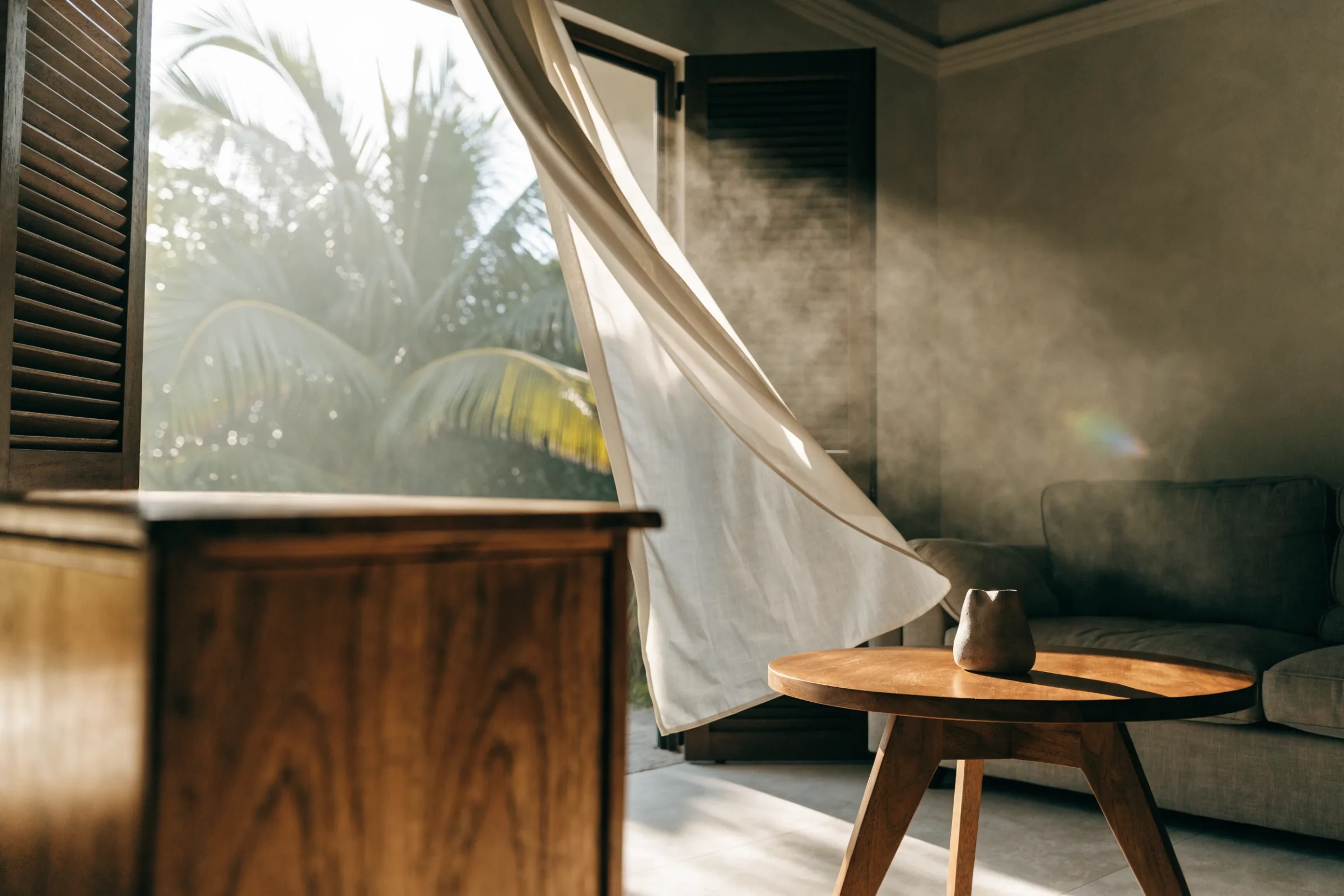
The good news is that humidity protection is mostly free. It is placement, airflow and a handful of habits, not products. This guide covers those habits, plus the first response when a door starts sticking or an edge starts to swell. What it does not cover is which timber to buy in the first place; that decision has its own guide on choosing timbers and boards before anything is built.
Wood never stops breathing
Understand one mechanism and the rest of this guide explains itself. Wood is hygroscopic: it absorbs moisture until it balances with the surrounding air, and it swells as it does, mostly across the grain rather than along it. When the air dries, the process runs backwards. That is the whole story behind drawers that jam in October and run freely in February, and behind hairline gaps that open in a long dry spell.
Movement itself is not damage. Damage is uneven movement: one face taking on moisture while the other cannot, which is how a flat board cups and a straight door twists. A piece built for this climate is sealed on every face precisely to slow the exchange down and keep it even; the solid teak pieces living in island homes in our portfolio are built on that principle. Your job as the owner is simpler: avoid creating the uneven conditions in the first place.
Placement does half the work
Where a piece stands decides most of what happens to it. External masonry walls carry moisture, and their inner face is the coolest surface in an air-conditioned room, so anything pressed hard against one sits in a permanent damp film. Pull cabinets and sideboards a few centimetres off the wall and let air move behind them. Keep furniture out of splash range of bathrooms and kitchen sinks, and off the routes where floors get mopped wet around its feet, because feet drink from below long before you see anything from above.
Airflow decides the rest. A room that breathes keeps every surface in it closer to the same moisture level, which is exactly what wood wants. Do not box large pieces into dead corners where air never turns over, and treat closed storage as the special case it is: cabinet interiors hold the stillest air in the house, which is why we build storage built with ventilation designed in rather than adding vents as an afterthought.
Air conditioning: a friend with a temper
Air conditioning can be the best protection furniture gets, or a daily stress test. Steady and moderate is the friendly version: a consistent temperature keeps the room's moisture level stable, and stable is everything. The hostile version is the on-off extreme, an icy bedroom all night and a sealed hot room all day. Every cycle swings the humidity, and warm moist air condenses on surfaces the cold cycle just chilled, furniture included.
If you run air conditioning, run it evenly and modestly rather than hard and briefly. Dry mode, or a small dehumidifier, does more for the wood than aggressive cooling, because moisture is the enemy and temperature is only its driver. A ceiling fan costs almost nothing to run and keeps air moving through the hours the compressor is off. And in a house left empty for weeks, some gentle ventilation beats sealing the place into a still, saturated box.
Custom furniture & carpentry
Made-to-measure furniture and woodwork designed and built for your space, from single pieces to full fit-outs.
Explore serviceStanding water always wins
No finish on earth outlasts a puddle. A sweating glass leaves a ring because the water sat; a plant pot without a saucer, or with a saucer that overflows, quietly destroys the metre of surface under it over a season; a wet towel dropped over a chair back does in one afternoon what humidity needs a year for. The rule is short: water may visit a wooden surface, it may not stay. Coasters and saucers under everything that sweats or drains, and spills wiped when they happen, not after lunch. Because it hosts all of the above daily, the most exposed piece in the house gets its own guide.
Sunlight works slower, but harder
Tropical sun through a window does two jobs on furniture. The visible one is fading: ultraviolet bleaches some timbers and darkens others, in the exact shape of whatever stood on the surface. The structural one is worse. Sun heats one face of a piece, drives the moisture out of that face only, and hands you the uneven movement from earlier as a cupped top or a twisted door.
You rarely need to redesign a room over this. Note where direct sun lands for hours at a stretch, and either move the piece, soften the light with a curtain or film, or accept the trade and rotate what stands there so nothing takes years of it on one side. Outdoor and semi-outdoor pieces are their own case: shade and airflow, never full sun against a wall that blocks the breeze.
Edges, ends and undersides: check the places nobody looks
Moisture does not attack the polished top; it walks in through end grain and unsealed backs. End grain drinks water many times faster than face grain, which is why table legs fail from the floor up and door bottoms fail before door faces. Once or twice a year, tip a chair, pull a drawer fully out, look behind the cabinet: what you want to see is finish, even a thin coat, on every surface. Raw, pale wood on an underside or a cut edge is an open door, and furniture that leaves the workshop sealed on every face is one of the cheapest pieces of insurance that exists. On Koh Samui, where outdoor humidity barely drops for months at a stretch, an unsealed edge is not a detail; it is the beginning of the story every swollen sideboard tells.
Swelling, warping, sticking: the first response
When a symptom does appear, the most valuable move is usually patience. A door or drawer that starts sticking mid wet season has swollen with the air, and much of that swelling reverses when the air dries. Planing or sanding it to fit at peak humidity is the classic mistake: come the dry months it shrinks back and now rattles in its opening with a permanent gap. Improve the room first: airflow, dehumidification, distance from the damp wall, then give the piece weeks, not days, and see how much of the problem walks away on its own. And when it's a door rather than a cabinet that sticks, the same physics play out at full scale — that case has a guide of its own.
Watch the pattern of what remains. A stick that eases as seasons turn is climate, and prevention above is the whole cure. A warp that stays through a full dry season, an edge that stays swollen and proud, or a joint that has opened is wood that has moved past its ability to move back. That is the point to stop experimenting; where the line runs between a quick adjustment and a real repair is covered in our care guide's section on where adjustment ends and repair begins. And if what you are seeing inside a cabinet is not swelling but spots and a musty smell, that is a different problem with its own playbook: the triage for mould inside closed storage. And damage that is neither damp nor mould — timber that sounds hollow, dry pellet dust, mud lines at floor level — has a third playbook: the triage when the culprit might be insects.
Related guides
- Custom furniture & carpentry
What wood survives a humid coastal climate?
How teak, other hardwoods and modern boards cope with humidity and salt air: what swells, what lasts, and how makers choose materials for coastal homes.Read the guide - Custom furniture & carpentry
How to care for custom wood furniture: a practical maintenance guide
A practical care routine for wood furniture: cleaning that doesn't strip the finish, hardware checks, early warning signs, and when to call a carpenter.Read the guide - Built-in wardrobes & cabinets
Stopping mould in wardrobes and closed storage
Why mould grows inside wardrobes and closed storage in humid climates, and how to stop it: airflow, moisture sources, finishes, and when to rebuild.Read the guide
Related services
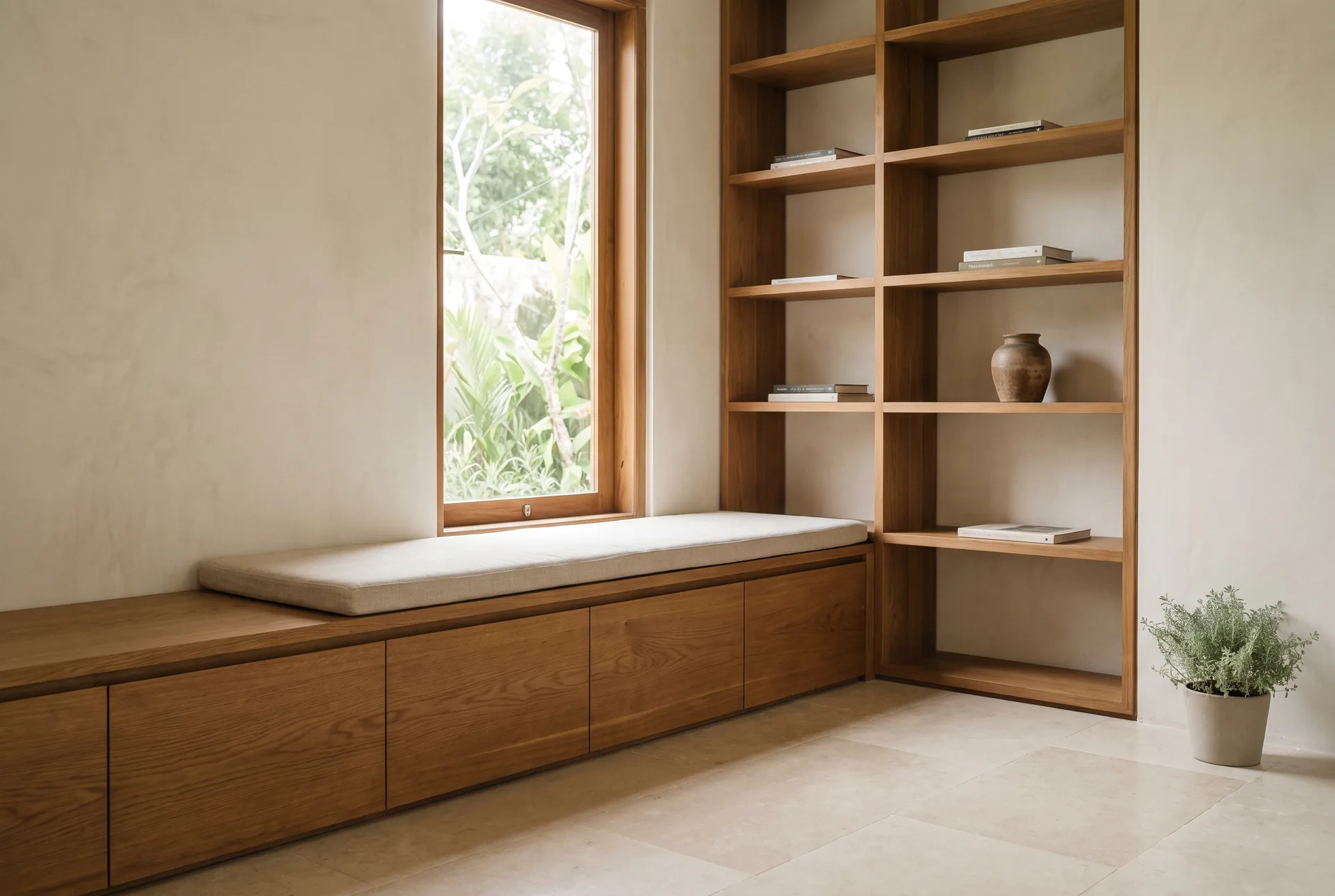
Custom furniture & carpentry
Made-to-measure furniture and woodwork designed and built for your space, from single pieces to full fit-outs.
Explore service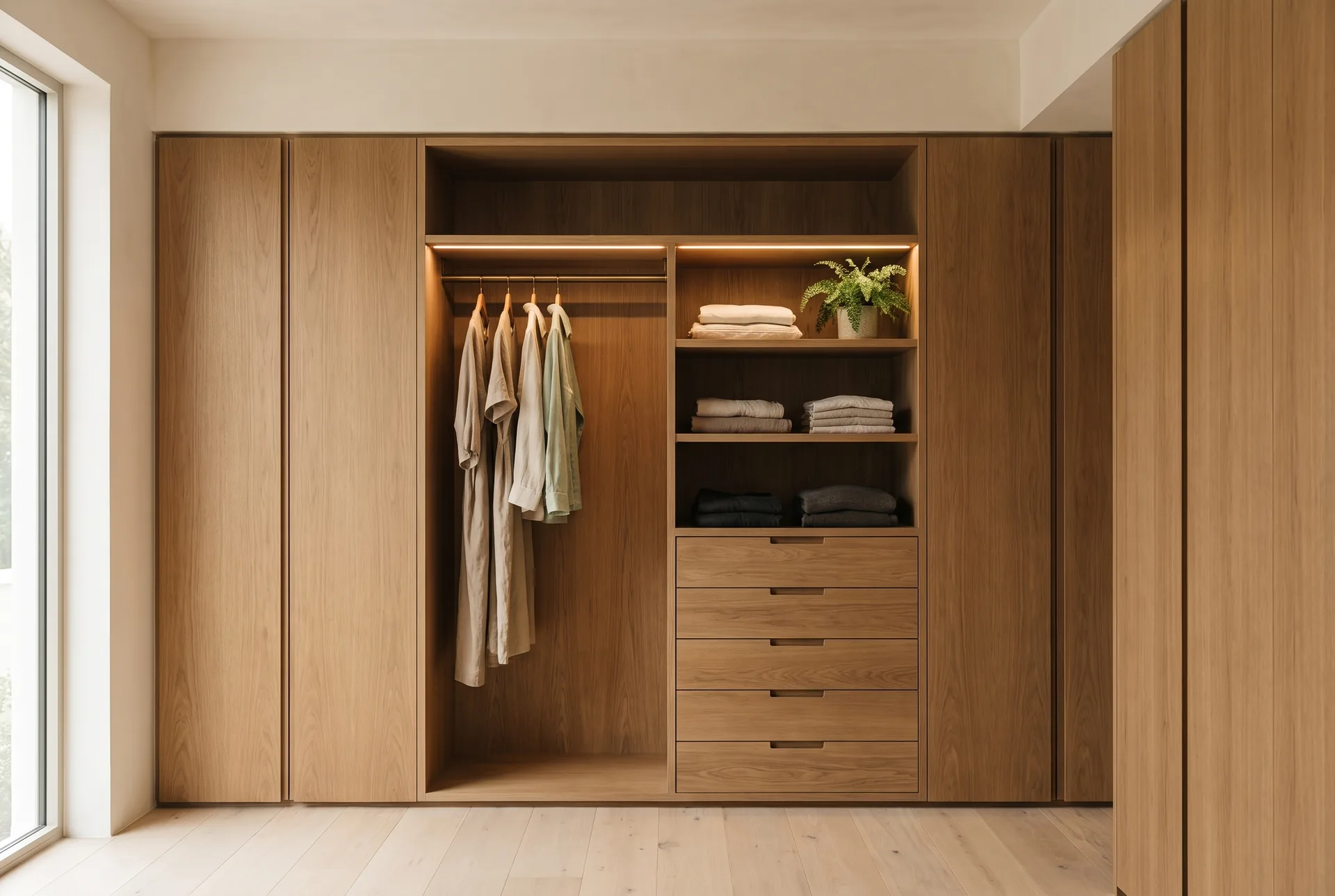
Built-in wardrobes & cabinets
Built-in wardrobes, closets and storage cabinets that use every centimetre. Measured, built, and installed.
Explore service
Tell us what you need built or installed.
Send a few photos and measurements — we'll get back to you with next steps.