
Ordering IKEA to Koh Samui: how it gets here, and who builds it
Published by Chaingkiat & Furniture — Nearly 30 years of hands-on carpentry, with our own workshop and crew on Koh Samui. · · 6 min read
An IKEA order bound for Koh Samui travels further than the checkout page lets on: a mainland warehouse, a long highway leg, a vehicle ferry, and finally your own access road. This guide walks through the routes an order can take, what to check the minute it arrives, which pieces are a sensible afternoon of DIY, and when the smarter move is handing the boxes to an island-based assembly crew.
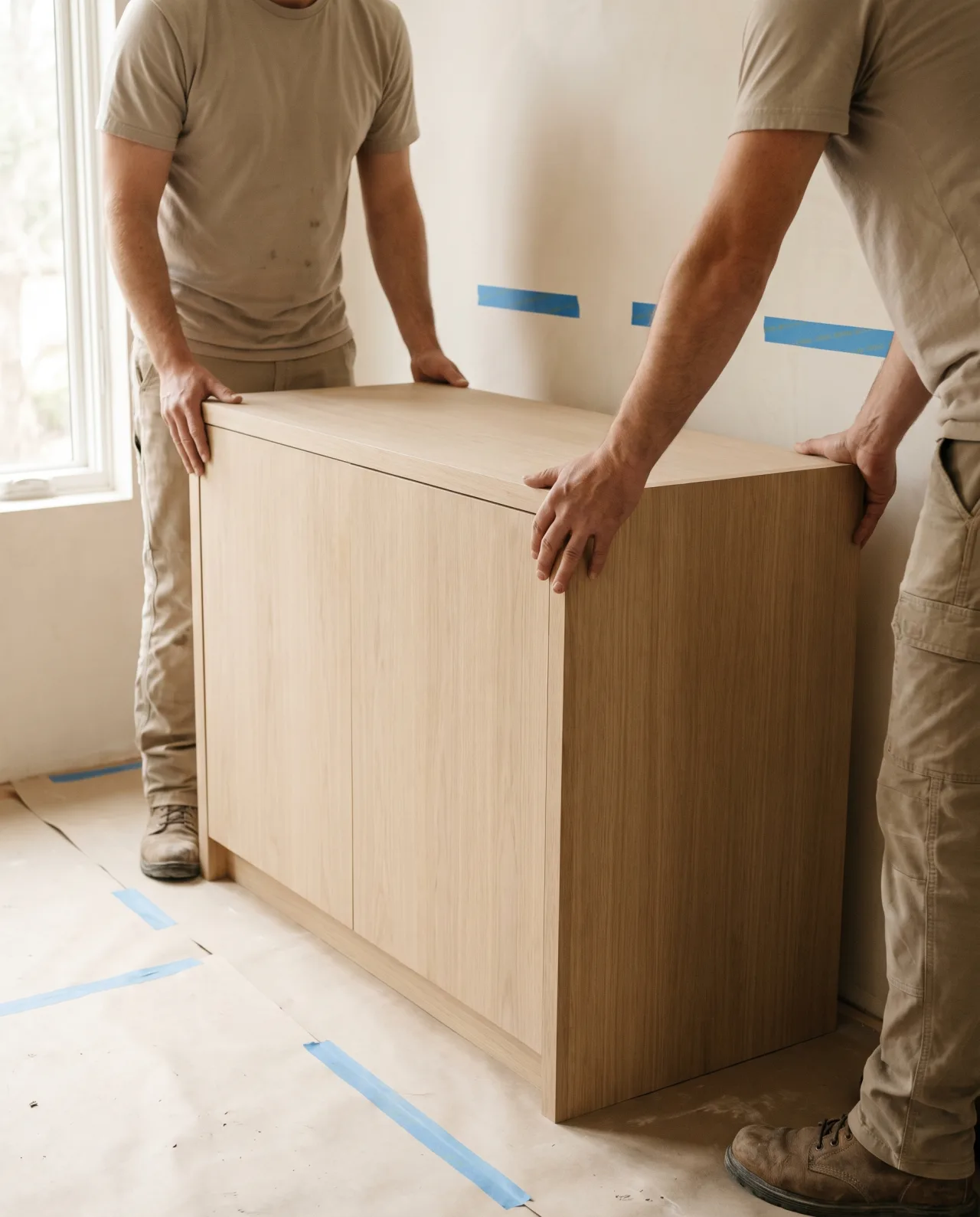
One thing to say plainly before anything else: we are an independent carpentry workshop in Chaweng with no affiliation with IKEA. What follows is the practical advice we give our own clients before they place an order, not a sales page for or against the brand.
Three ways an order reaches the island
The most direct route is IKEA Thailand's online store with its truck delivery option. At the time of writing, IKEA's own delivery page lists truck delivery from 290 baht and quotes provinces outside Bangkok at 3 to 14 business days — and the island itself does not appear on the page's list of excluded areas, though its neighbour Ko Tao does. None of that is a promise for your address: enter your postcode at checkout and check the current rate and delivery window there before you plan around either.
For small goods there is also a parcel option — capped, at the time of writing, at 25 kilograms per order with no item over 1.5 metres. That covers lamps, textiles, and kitchenware, but nothing you would call furniture.
The second route is doing the mainland leg yourself. At the time of writing IKEA's nearest stores are in Phuket and greater Bangkok, so a store trip means a long drive and the vehicle ferry home with a loaded pickup. It costs a full day or two, and it buys the most control: you choose every carton, see its condition before it travels, and nothing sits in a depot waiting for a consolidated run.
The third route is the island's middle layer: local resellers who take your shopping list, place the mainland order, and bring it across in consolidated loads, and freight services that collect mainland purchases of any kind. You pay a convenience margin and give up some control over handling. Whichever one you talk to, ask the same two questions — who is responsible for damage discovered on opening, and does the price end at the gate or in the room the furniture belongs in.
The journey is the risk: check everything before you sign
However the order travels, it changes hands more often than a mainland delivery ever would: warehouse to line-haul truck, truck to ferry deck, ferry to an island vehicle, and that vehicle to your doorstep. Flat-pack cartons are engineered to survive careful handling, not four rounds of restacking, and the damage they pick up on the way is usually invisible until a box is opened.
So count before you sign. A single wardrobe can arrive as half a dozen cartons, each with its own article number, and the order confirmation lists every one of them. A box found missing while the driver is still standing there is a note on the paperwork; the same box discovered on Saturday morning is a phone call nobody returns.
Then look at what you are signing for. The receiving drill itself — photograph damage, note it on the delivery paper before signing, open anything suspect while the driver is still there — is the same one our assembly-day guide walks through for every island delivery. What raises the stakes with IKEA is the replacement maths: a damaged panel is not a quick store run from here, it repeats the same mainland-and-ferry cycle you just waited through, so the paper trail you create at the door is worth real money.
Flat-pack in the tropics: what is genuinely fine to build yourself
What arrives is chipboard, cardboard, and a bag of fittings — three things the climate here is unkind to. Get the cartons under a roof the day they land: cardboard wicks moisture off a tiled terrace overnight, chipboard edges swell where damp finds them, and a box left in a sun-heated vehicle cooks its glue lines. Staging the delivery properly is half the battle and needs no tools at all.
A good share of the catalogue really is a pleasant afternoon of DIY. Bedside tables, a bookcase, a desk, dining chairs, a chest of drawers for a child's room — one patient person with the manual will do a perfectly good job, and there is no reason to pay anyone for it.
Some builds are a different animal. Wardrobe-scale carcasses — the PAX class of system above all — mean standing a very tall, very heavy frame square in a hot room, and doing it alone is somewhere between miserable and impossible. Glass and mirrored doors punish a single slip with no second chance. Long shelf spans and sliding-door hardware want a level of precision that a tired amateur at hour four no longer has. If your order leans that way, plan for help before delivery day, not after the first carcass is lying across the bedroom floor.
Furniture assembly & installation
Flat-pack and imported furniture assembled, levelled, and anchored safely — beds, wardrobes, desks, and more.
Explore serviceWhen a local crew earns its fee
IKEA Thailand does list an assembly service of its own, provided through a third party and priced, at the time of writing, at 7% of the product's retail price — but it is offered only with the truck delivery option, and the published pages do not say whether the provider works on the islands. If you want to rely on it here, confirm with IKEA's customer service before ordering rather than at the door.
A local crew makes sense in three situations: a large order, where a villa's worth of cartons is days of work for one person and a single day for a team; tall storage, which needs two pairs of hands and proper wall fixings; and a hard deadline — a handover date or arriving guests — where the furniture must simply be done. What a well-run day looks like, from access checks to the final level, is covered in our step-by-step guide to assembly day — worth reading even if you intend to hire, because it tells you what to expect of whoever you pay.
Whoever does the building, tall storage must end up anchored to the wall. How that works on the island's rendered-brick and concrete walls is covered in the assembly guide linked above — if the rest of the build feels like a DIY afternoon, the anchoring is still the step most worth handing over.
When the range simply doesn't fit the room
IKEA's strength is standard modules at standard prices, and its limit is the same thing. Villa bedrooms here often refuse to cooperate: a wall 20 centimetres narrower than the next wardrobe size down, ceilings that leave a dust shelf above every unit, an alcove no module was drawn for. You can bridge the gaps with filler panels, or accept dead space and move on — for one wardrobe in a guest room, that is usually the right call.
But when you catch yourself designing workarounds for room after room, the arithmetic changes, and it is worth pricing having a piece built to the room's measurements before defaulting to the catalogue. A made-to-order piece is sized to its wall, built for the humidity it will live in, and arrives assembled — which, on an island, quietly deletes most of the delivery problems this guide exists to solve.
Settle these five things before you click order
First, run your postcode through the checkout and read what it actually offers today — rates and coverage change, and the checkout is the only answer that counts. Second, measure the access: the largest carton on the order against your doorways, stair turns, and the road a six-wheel truck may refuse. Third, agree a covered spot where cartons can wait. Fourth, decide who assembles what before the boxes arrive, not after. Fifth, keep every scrap of paperwork from order confirmation to delivery note.
And if the list is long or the house sits at the top of a steep concrete track, send us the order list before you buy — it is far easier to flag the item that will fight back while it is still in your basket than after it has crossed the sea.
Related guides
- Furniture assembly & installation
Getting furniture assembled on Koh Samui: a practical guide
How furniture assembly works on Koh Samui: flat-pack and imported deliveries, what to prepare, anchoring on concrete walls, and when to call a professional fitter.Read the guide - Custom furniture & carpentry
Custom vs ready-made furniture: which fits your villa?
Custom or ready-made furniture for a Samui home? How they compare on fit, durability in island humidity, and when a bought piece is the smarter choice.Read the guide
Related services
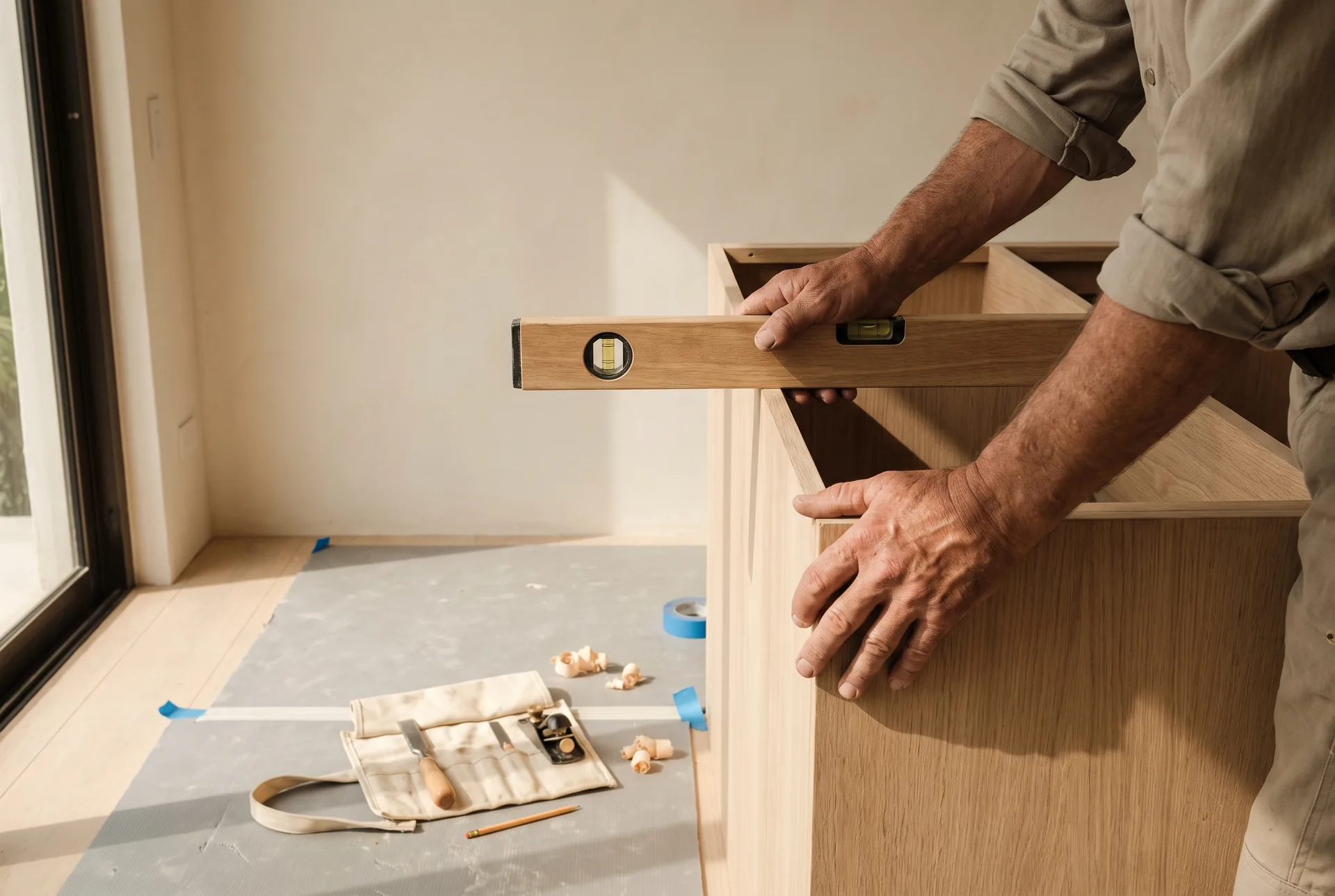
Furniture assembly & installation
Flat-pack and imported furniture assembled, levelled, and anchored safely — beds, wardrobes, desks, and more.
Explore service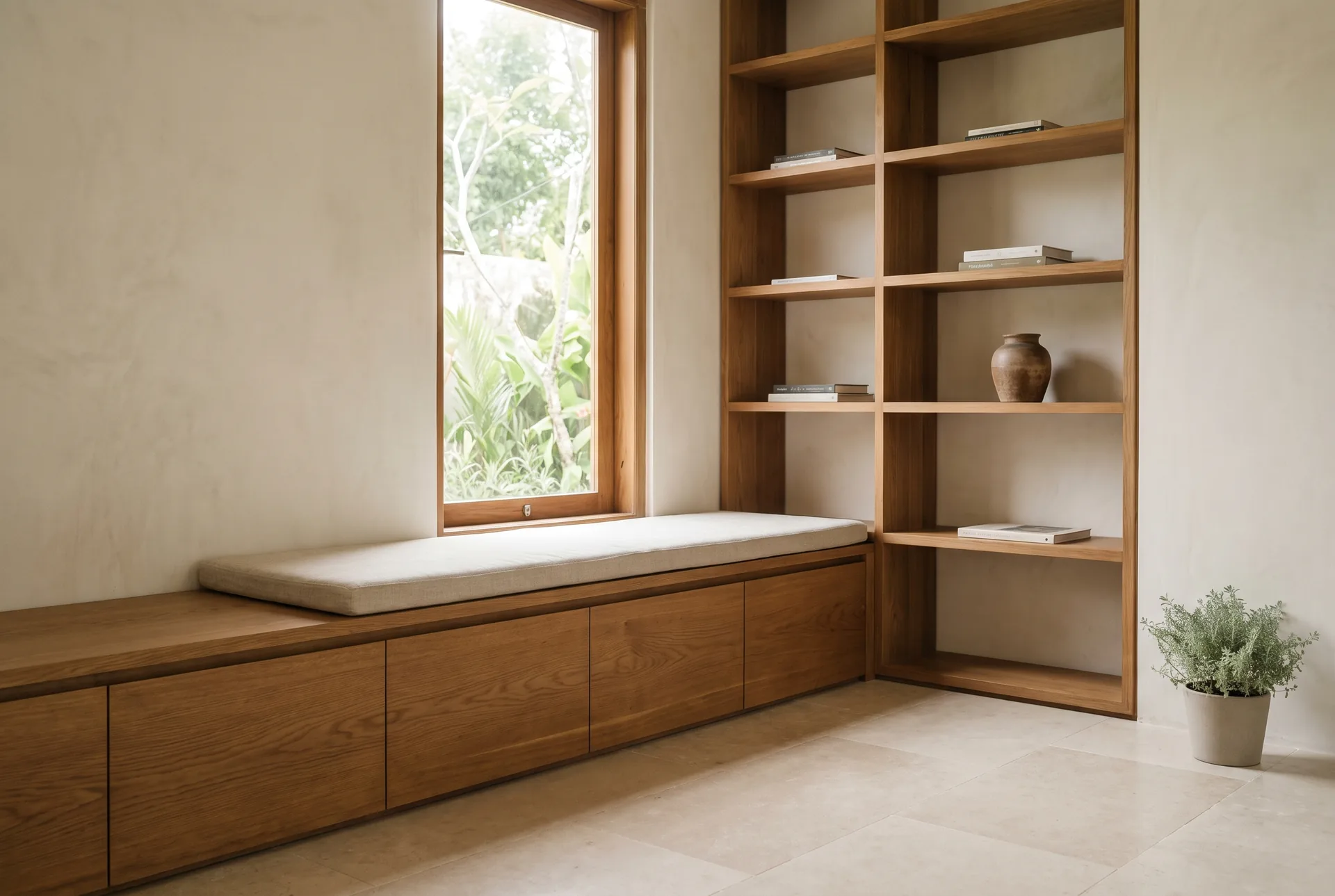
Custom furniture & carpentry
Made-to-measure furniture and woodwork designed and built for your space, from single pieces to full fit-outs.
Explore service
Tell us what you need built or installed.
Send a few photos and measurements — we'll get back to you with next steps.