
How to commission custom furniture remotely: a guide for owners abroad
Published by Chaingkiat & Furniture — Nearly 30 years of hands-on carpentry, with our own workshop and crew on Koh Samui. · · 7 min read
A good share of the villas we furnish belong to people who are somewhere else. They bought or built on Koh Samui, they live in Singapore, Sydney or Stockholm, and they want a wardrobe in a bedroom they will next see in December. Commissioning custom furniture remotely is normal work for an island workshop, and it runs well when both sides know which parts of the job the distance changes.
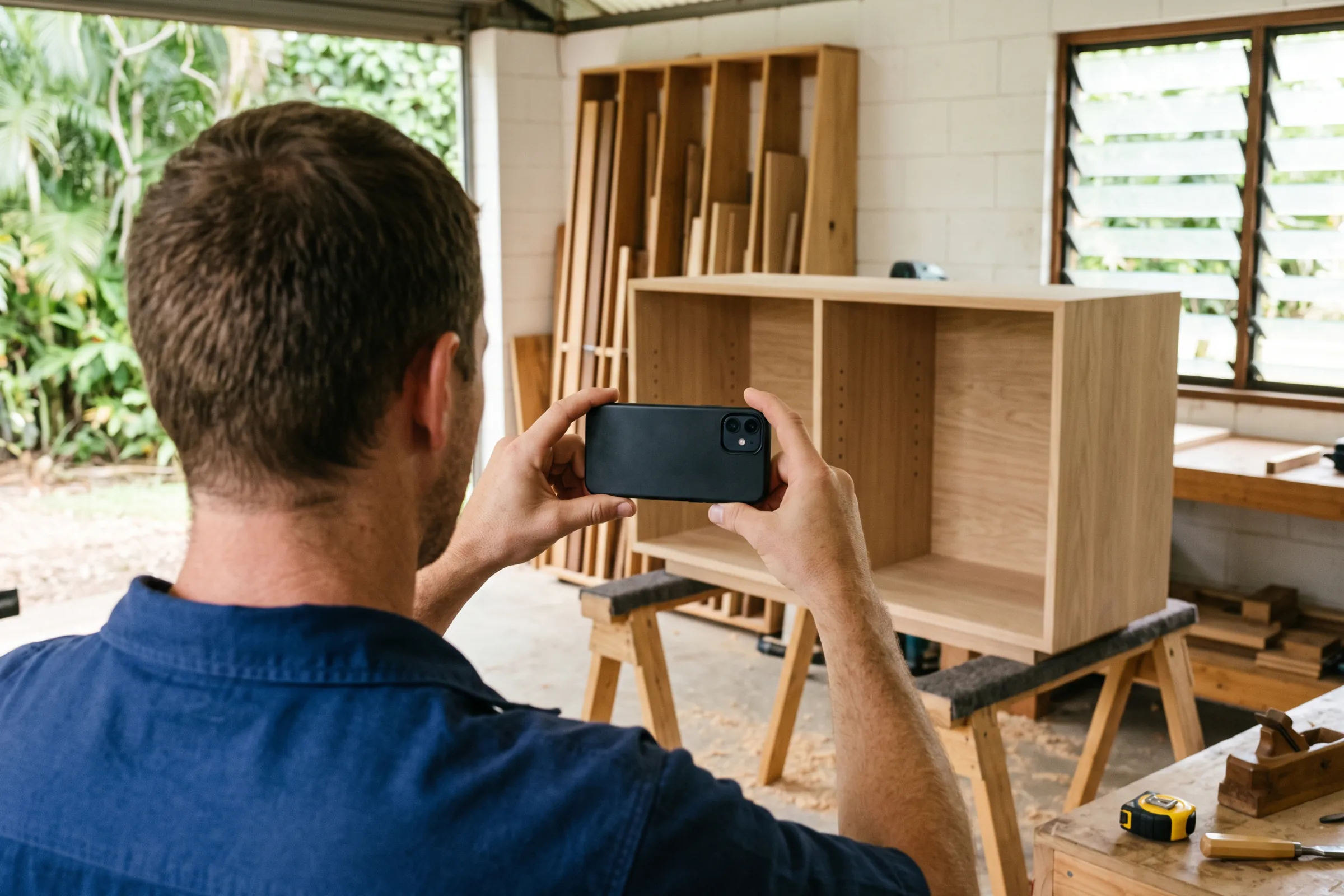
This guide is arranged as the exchange actually happens: what you send, what comes back, who does what on the ground, how approvals and updates work when you cannot stand in the room, and how the handover is checked without you. It is written from our own process of making furniture to order, with the confirmed facts stated as facts and the variable parts stated as things to agree in writing.
What to send first
Start with pictures, and make them useful. Photograph each room from the doorway and from the opposite corner, then close in on the wall or alcove the piece will occupy, and put something of known size in the frame: a tape measure held open, an A4 sheet taped to the wall, a standard door. A slow phone video walking through the room shows swing, light and access in a way stills cannot. Send any drawings you have, however old; they are wrong in ways a workshop knows how to check. Finally, reference images of what you like, with a line on what specifically you like about each: the proportions, the colour, the handle-free doors.
Add the practical facts a visitor would notice in a minute and a remote workshop cannot: which walls are external, where the air-conditioning unit is, whether the property is occupied or empty, and who holds the keys. That last one matters more than any photograph, as the next sections explain.
How a brief becomes a quote
From that package, a workshop can give you a real conversation and an honest rough figure, and nothing more, because the number that binds is built from measurements only a visit can take. What a serious workshop will not do is quote a fitted piece to the millimetre from your photographs and floor plan, however good they are. If you want to make the first exchange as precise as possible, the homeowner measure that makes a first quote possible covers exactly what to record before you fly out, and it turns a guess into a useful estimate. Interior consultation is free on our side, and the quote that follows the site visit is itemized per project: each piece, its materials, finish, hardware and installation, with exclusions written down. What each of those lines does to the total is its own subject — the levers that set a commissioned piece's price reads the same from any time zone. Read it as closely from abroad as you would across a table.
The measure you don't take
Here the remote job is identical to the local one, which is the point. We measure and inspect on site before any fitted piece is priced or cut, and the measurements we take are the ones the piece is built from, as with any workshop worth using. What that means for an owner abroad is reassuring rather than limiting: your photographs and numbers are for planning and briefing, and the responsibility for fit sits with the people who measured. That division does not change because the owner happened to be on another continent that week.
Custom furniture & carpentry
Made-to-measure furniture and woodwork designed and built for your space, from single pieces to full fit-outs.
Explore serviceWho opens the door
Every remote commission has a person on the island, and naming them early saves weeks. Usually it is a property manager, a caretaker, a rental agent or a trusted neighbour; sometimes a builder still finishing the house. Their job is access: letting the workshop in to measure, again to install, and once more for adjustment, plus being the eyes when something needs a look that a photograph cannot settle. Give the workshop their name and number, tell them which decisions they may make on your behalf and which come back to you, and put both in writing. A caretaker who has been told nothing will, quite reasonably, refuse to let strangers measure a bedroom.
Approving by drawing and by sample
Nothing gets cut before you have approved the design, and remote approval works on the same documents as local approval, sent instead of shown. You see and approve the design and the quote before fabrication starts; that is how we work wherever the owner happens to be. Distance only changes how the approval travels. Say at the outset what you need on the drawing in order to judge it — overall dimensions, the internal layout, door and drawer positions, which way each door swings, the hardware — and a workshop that intends to build the piece properly will have no trouble marking it. Materials and finishes are approved from sample photographs taken in daylight, with a ruler or a familiar object for scale, and where colour is critical ask for a physical sample rather than a photograph: material and finish samples are prepared for every job, and whether yours is collected by your key-holder or sent on to you is worth settling when you ask. Owners who already hold a designer's set will find the same rules apply to sending drawings instead of visiting: the workshop produces shop drawings from them, verifies the site, and asks the questions the drawings leave open.
Give approvals in a form that can be found later, a reply on the same thread or a signed PDF, not a voice note. The written approval is what both sides point at if a door ends up hinged on the wrong side.
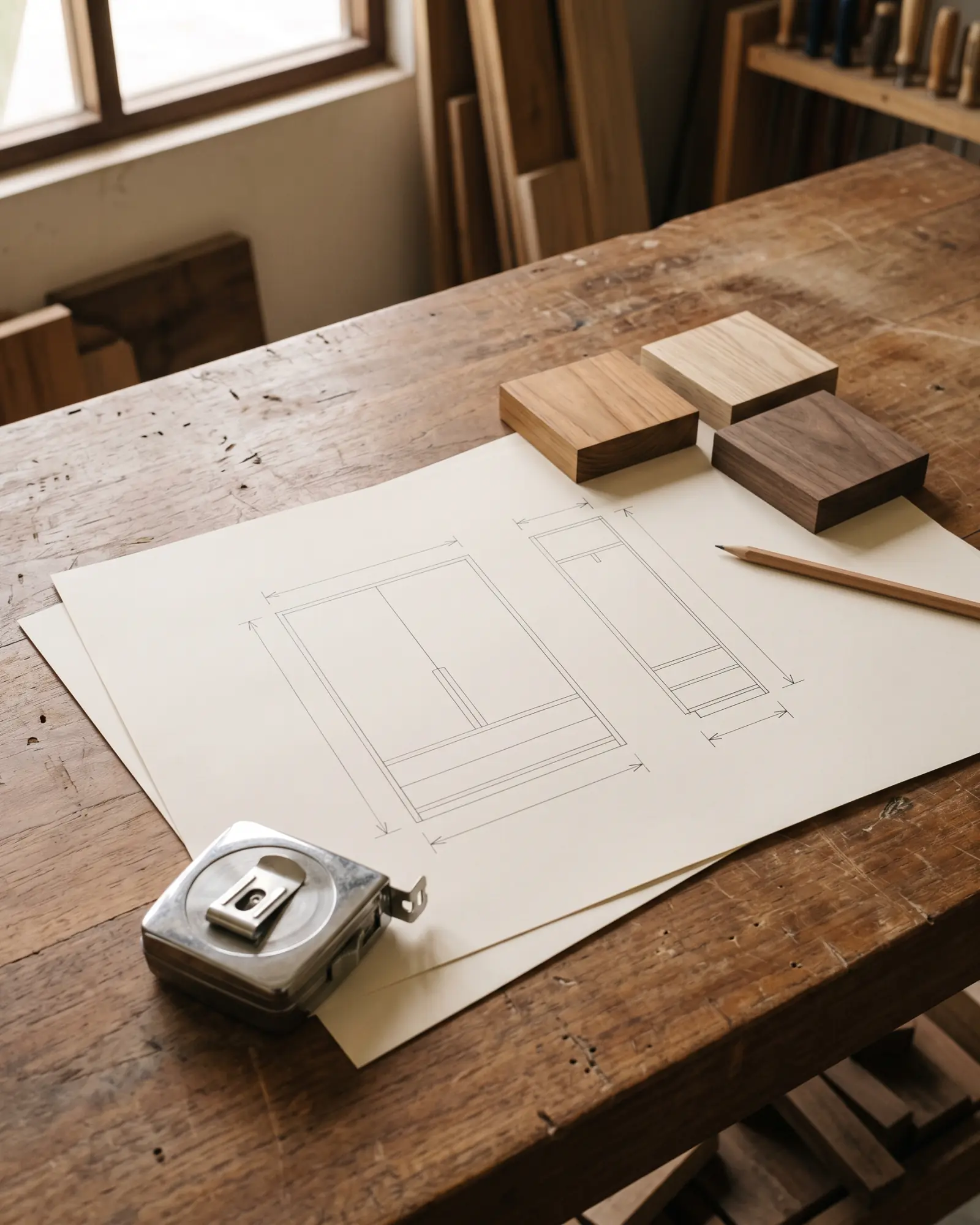
Channels, time zones and the rhythm of replies
We work on the channels most owners already use: LINE, WhatsApp, phone and email. Pick one as the channel of record for drawings and approvals, usually email, and use the messaging apps for the quick questions, photos and updates that keep a job moving. Do not spread one decision across three channels. Time zones are the practical friction: a workshop on Thai time and an owner in Europe or the Americas overlap for only a few hours a day, so a question sent at your evening is answered at ours, and a decision that takes three exchanges takes three days. Batch your questions and agree a regular update rhythm. Distance does not slow furniture; unanswered messages do.
Money, milestones and what to fix in writing
Payment stages are agreed in the quote, in writing, before anything starts, and a remote owner should insist on that more firmly than a local one, because the reassurance of a site visit is not available. What to fix: which payment is tied to which milestone, what each milestone means in observable terms (drawings approved, production complete, installed), how the workshop evidences a milestone when you cannot see it, and which currency and method are used. The quote for your project is the only document that counts; no workshop's figures should be taken from a web page. Timelines belong in the same document, as realistic dates rather than promises, with the understanding that island logistics, weather and the availability of your key-holder all move them. If you want that half of the document understood before you sign it, reading a project timeline before you agree to it sets out what a date has to contain to be worth anything.
While you are away: production, installation, evidence
Once drawings are signed, the job goes to the workshop in Chaweng and your side of it becomes reading photographs. Ask for progress pictures at the stages that matter, carcasses assembled, doors finished, pieces loaded for site, and treat them as the record of the job, not a courtesy. Installation happens with your key-holder present, on a date they and the workshop agree. Before the crew leaves the site, ask for photographs of each piece in place, doors open and closed, from more than one angle; it is a reasonable thing to request, it costs a few minutes on the day, and it is what you will be reading when you decide whether the job is finished. The what arrives in the photo updates: real installed work standard is the one we hold ourselves to: real rooms, real light, no renders.
If the villa is also receiving furniture you bought elsewhere, flat-pack from the mainland or pieces shipped in, the same visit logic applies to that, and it is easier to have one crew receiving and assembling bought pieces while you're away than to ask a caretaker to sign for cartons they cannot check. Arrange one point of contact on the island for everything that arrives, and arrange it before the first delivery date rather than in the middle of it.
Handover when you are not there
The last risk of remote commissioning is accepting work nobody inspected. Solve it the way builders do: have someone run a snag list before the final payment, either your key-holder with a written sequence to follow or you yourself on your next visit, with the final milestone timed to that. Our guide on checking the work at handover, or having someone do it is written to be handed to a property manager as-is: what to open, what to press, what to photograph, and how to write the list so the workshop can act on it. Fitted furniture also settles into a conditioned building over its first months, so agree now that an adjustment visit after settling is part of the job and how it is arranged. Done this way, the piece you next see in December is the one you approved in June.
Related guides
- Custom furniture & carpentry
Planning custom furniture for a Koh Samui villa
What to decide before commissioning custom furniture for a Koh Samui villa: materials for island humidity, measuring, and how the build and installation work.Read the guide - Custom furniture & carpentry
How custom furniture gets built from your drawings
How a workshop turns architect or designer drawings into built joinery: shop drawings, site verification, tolerances, materials sign-off and installation.Read the guide - Custom furniture & carpentry
Snagging furniture and joinery at villa handover
What to check on furniture and joinery before signing off a villa: door and drawer alignment, hardware, worktop joints, finishes, moisture signs and timing.Read the guide
Related services
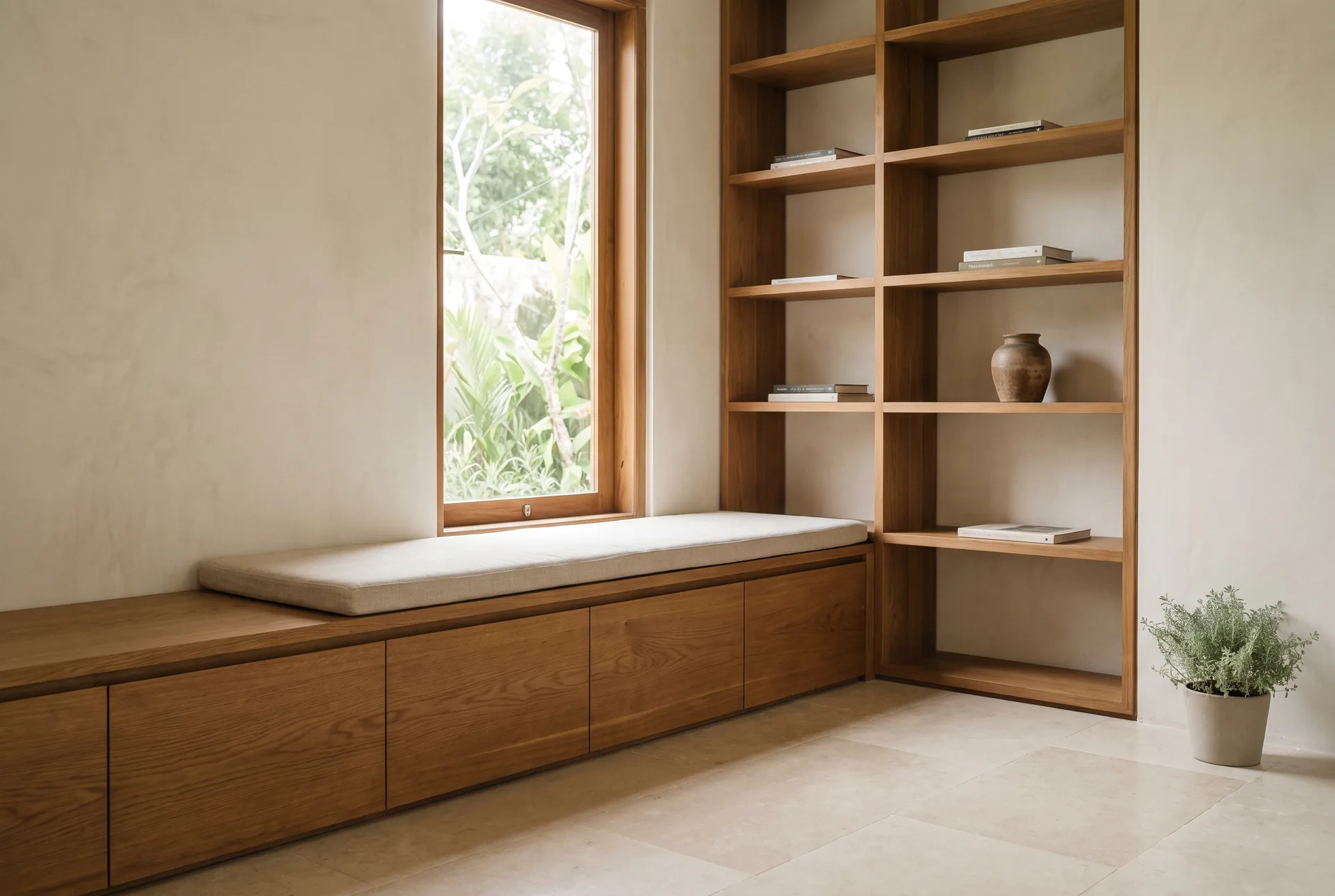
Custom furniture & carpentry
Made-to-measure furniture and woodwork designed and built for your space, from single pieces to full fit-outs.
Explore service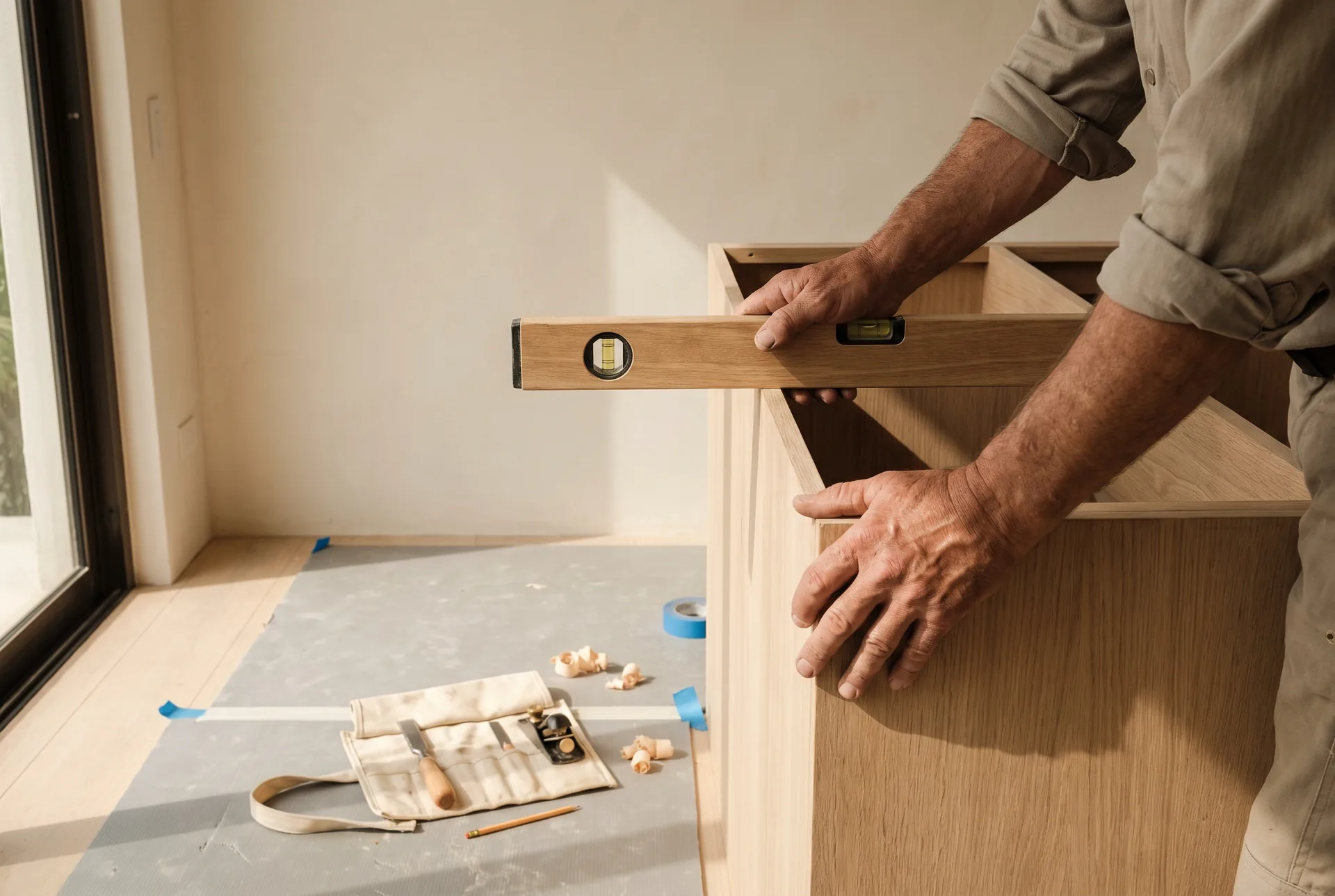
Furniture assembly & installation
Flat-pack and imported furniture assembled, levelled, and anchored safely — beds, wardrobes, desks, and more.
Explore service
Tell us what you need built or installed.
Send a few photos and measurements — we'll get back to you with next steps.